Showing posts with label Marasa Africa. Show all posts

Monday, 2 March 2015

The sleeping lion emerges in East Africa

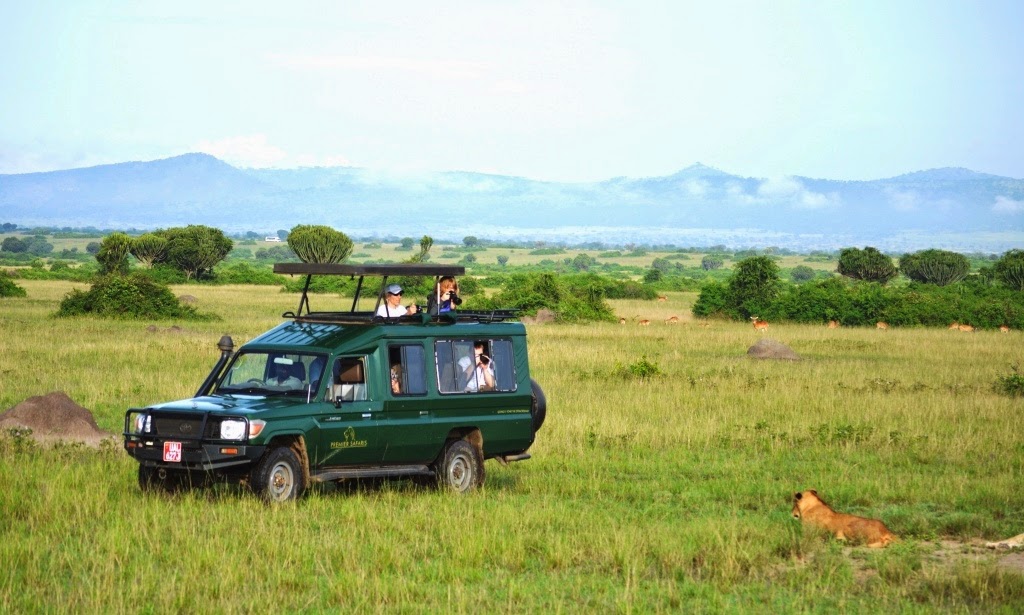
Lion on conservation drive by Corne Schalkwyk as part of Premier Safaris in Uganda 

We are all aware that last year was a very rough year for the East African tour operators as a barrage of negative press hit the East African region. This happened when Africa travel was actually at an all-time high and cough many of us off-guard, as a massive drop-off was the last thing east Africa was expecting. Especially the emerging destination Uganda, seen as the “pearl” of the East Africa offerings.

Uganda in 2012 showed remarkable growth in their tourism industry, even outgrowing major markets in Africa such as South Africa if taken as a percentage growth for the year in 2012. Lonely planet hailed it as the best destination for 2012. This was due to a sustained return in stability, security and a combination of some great marketing by the private sector investors in Uganda such as one of their larger tourism role players Marasa Africa as part of the Madhvani group of companies.  

Uganda Map www.johnstevenssafaris.com/
The country was finally on track and tourism became the single largest income earner for this "Pearl of Africa". This was followed by a great 2013 even throw there were worries about government implementing new taxis on Safari accommodation and how this would affect their forward bookings. In the case of 2013 calmer heads prevailed and government assisted the country and held back on implementing the tax. In many ways this assisted the private sector to invest in marketing and expansion of much needed new product offerings.  

Unfortunately 2014 turned into a bit of a horror show as government realized the potential funds that could be generated by taxing the small yet growing industry in this otherwise poor region and pounced on the fledgling industry when they were in need of funds, in some respects the tourism industry paid the price for the anti-gay bill that was introduced and then scraped in Uganda. Government funding dried up as external forces showed their dismay with the bill, and they made up the difference by taxing this emerging industry. 

Images that emerged as part of the Anti gay bill campaign internationally 
This new vat on accommodation at a hefty 18%, in turn sky-rocketed pricing and heavily impacted on the tour operators who tried to absorb the vat where possible to assist their clients and forward bookings into 2015. In some respects the industry that was most outspoken about the bill and its implications ended up paying the price of resistance.  

Unfortunately this was not the end of the regions problems. The Ebola crises hit the continent, and even throw the problem originated in West Africa thousands of kilometres away from Uganda. It hit the country already crippled by an anti- gay bill looming above its head and new taxes hard.

Combined with the new increased pricing, and an unofficial travel ban due to the gay bill in Uganda, Ebola became a last straw scenario, almost breaking the relatively new industry. Uganda also had to deal with some mostly irresponsible reporting on terrorism and security treats related to possible bomb blasts.....that never took place. We know that internationally there is an ongoing terrorism problem but east Africa didn't have the additional scope to overcome these in 2014. Although there were isolated threats to Uganda security in most part this was over-spill from their neighbour’s Kenya that was battling from serious security treats and bomb blasts that managed to bring its coastal tourism to its knees.
Premier Safaris experiential Lion conservation trip in Uganda 

 Mistakes and crises management from 2014, was harder to leave behind than expected and was clearly coming to the foreground in early 2015 when there was a serious lack of forward bookings due to cancellations and an almost unofficial travel ban to east Africa. Uganda was left with serious concerns related to closure of some tour operators, and downsizing within the industry. But the 2015 reality wasn't unforeseen by the larger investors such as Marasa Africa, that also has properties within Kenya. 
Marasa Africa clients #TravelToUganda campaign 
 By late 2014 larger private tourism investors in Uganda began to address some of the issues in response to the fact that they noticed that tourist sees Africa as one country, this was echoed by feedback from many tour operators. It was clear that people didn't know where Uganda was, especially in relation to West Africa. They also didn't know that in some cases Europe was actually closer to the hot zone than Kenya or Uganda. And unfortunately Uganda was also included with Kenya when it came to risk assessment done by potential tourists as it’s a major add on to Kenya Safaris. Marasa Africa tried to address this with an “Africa is not one continent campaign”, while sending out images of tourists enjoying their lodges without fear of Ebola.
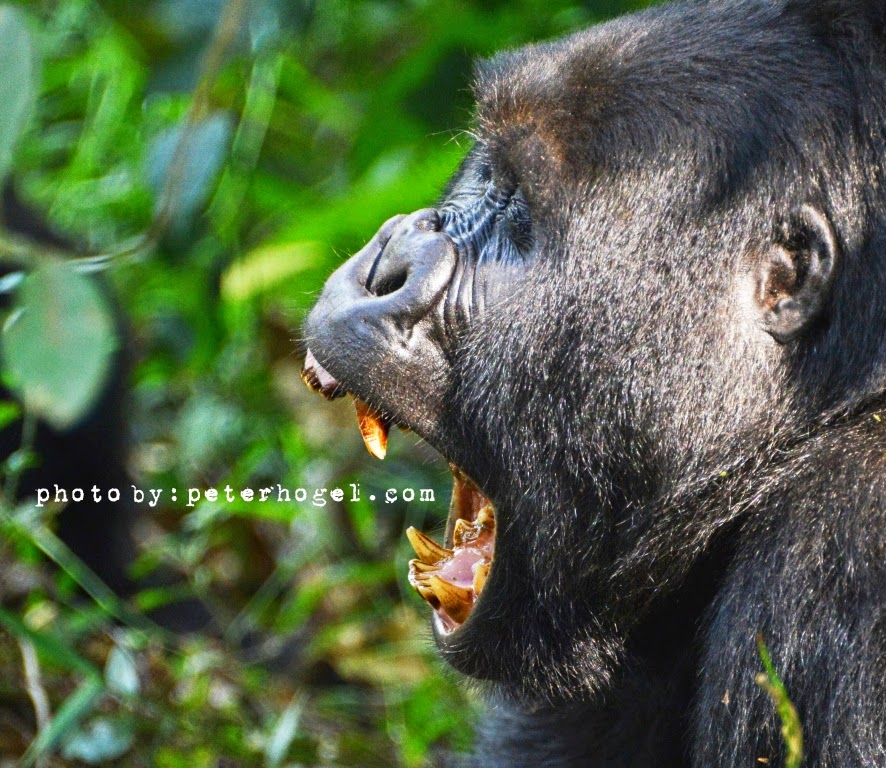
Gorilla Safari experience as part of Uganda Tourism board and Marasa  - Photo by Peter Hogel 


For years Uganda was the Gorilla Safari add on to a Kenya migration trip. Jinja along the Nile, was the adventure and backpacker “White water rafting" section that can be combined with a Kenya Safari. As Uganda started too emerged as a stand-alone destination, it still had to deal with old perceptions and a lack of longstanding quality destination marketing.

This is starting to change and not only did the heavily underfunded country of Uganda make it through some of the worst times East Africa tourism has endured in recent years, it is showing signs of healing and new re-emerging .
Murchison falls in Uganda  
After having discussions with major tourism destination marketers around the world it became clear that it was only a matter of time and some much needed  investment in specialist skills needed to market the country, before this sleeping lion awakes. Hanna, the owner of the internationally renowned PR and tourism marketing company KPRN in Germany mentioned that we would be surprised as to what will happen if the right company gets hold of this lion and wakes such a sleeping lion.

It would seem that there is a nudging at this sleeping lion as last minute enquirers are coming in to the country and companies with good reputations and quality guides are once again coming to life in Uganda. Even the more skittish US market, is returning to Uganda to ensure they get a piece of the biodiversity the country offers.
Nile delta in Uganda close to the Marasa Africa lodge Paraa Safari lodge 

 It’s hard to match Uganda's range of biomes and activities and experiences elsewhere, even in east Africa. It’s long been described as the sample board of Africa, having pieces of almost every country within Africa in one small spot.
View over Guiding mountain from Clouds lodge used by Premier for gorilla trekking 


Uganda is bound to step out, and show Africa its plumage. It is after all the capital of Africa’s birding with a staggering more than 1000 species. This is the highest concentration of birds found in Africa (more than 50% of the total species found on the continent), and is the most accessible place to see the legendary Shoebill.
Kazinga Channel one of Uganda's hot-spots for birding by Corne Schalkwyk 


This abundance of species combined with its already well known primate offering including the largest numbers of the critically endangered mountain gorillas is going to be a force to deal with when it emerges from its sleep.
Remote, bespoke experiences awaits in unspoiled parks teeming with wildlife in Uganda 


 Hopefully we will once again see the old colonial safari destination that combined glaciers treks in the Ruwenzori with great outstretched savannah safaris along the Nile and the Kazinga channel in Uganda.
The sleeping lion is growing up and showing its teeth - Uganda Tourism by Jonothan Hen-Boisen


Kenya is also showing good recovery and it’s definitely “open for business” as usual, 2015 might just be the year of recovery for East Africa. 

Below are some of the exciting new products emerging form Uganda about to take the industry by storm. These include Hot air balloon Safaris over the crater lakes of the rift valley from Mweya Safari lodge, Specialist programmes by Premier Safaris that made it to the list of best Bucket list Safaris for CNN travel readers in 2015 and many more experiential travel options being released this year. 
Hot air Balloon Safaris over Queen Elizabeth National park with a bush breakfast from Mweya Safari lodge 

Premier photographic trips led by Albie Venter - These trips include night time searches for nocturnal delights of Uganda 


Intimate Gorilla with Premier and CTPH
Even the gorillas gave Uganda a thumbs up, as their numbers have been steadily increasing with the borders secured. This is an incredible success story for conservation that almost lost one of our most endangered species. The CTPH has even managed to reach the local community surrounding the gorilla sanctuaries and has reported a decrease in the human birth rates by means of an educational campaign to teach about contraception and the benefits of smaller households. 

Some links related to the information used for this blog update: 
Premier Safaris website

Premier Safaris conservation partner in Uganda CTPH - conservation through public health: http://www.ctph.org/

Marasa Africa Lodges: www.marasa.net  
Uganda Tourism: http://www.visituganda.com/
PM

Intimate Gorilla Safaris with Premier Safaris as mentioned by CNN Travel  - Image by Jonothan Hen-Boisen


Thursday, 7 August 2014

“Clarence” the story Continues

I first became aware of this on-going battle that epitomises the human animal conflict that silently exists in almost every conservation area around the globe when I heard the story of Clarence. Now an aging male lion “Clarence” has had his share of hardships but defied all odds in what can only be described as one of the most inspiring tales I have come across in Africa.
Bernie and Clarence in happier days


Since that update, now a year ago, we kept our eye on this amazing lion to see how the story unfolds and wanted to once again share this story on the brink of world lion day that will be celebrated globally on the 10th of August 2014.

In Uganda a country that can only be described as a microcosm of Africa where you encounter active volcanoes, deserts, amazing jungles, huge lakes and sprawling grassland savannahs I also stumbled onto an almost unbelievable story of survival against all odds!
Buffalo in Murchison falls national park by Corne Schalkwyk 


Visitors to the Murchison Falls National Park will be awed, inspired but also saddened by their encounters of the resident lion prides of this truly wild and amazing park in the great lakes region of Eastern Africa.
Boat Safari on the White Nile in Murchison Falls National park by Corne Schalkwyk 


 Clarence also referred to as "butcher-man" by the locals in reference to a Ugandan reggae singer that has a similar limp  in coalition with his brother fondly referred to as Bernie by the guides ruled the park for many years ruthlessly dispatching upcoming rivals, even killing the male of a rival pride in the area before disaster struck the brothers in 2011. Clarence got caught in a poacher’s snare that left him with a life-threatening injury on its hind leg. The kings, of the well-known six-member pride, had been limping in pain following the snare incident that led to a fracture in the limb. The field staff of Uganda wildlife authority (UWA) had observed that the fracture was evident and very serious, as the lower limb was hanging and only held by a small ligament.

UWA took the courageous yet unusual decision to intervene as part of their fight against the on-going losses due to poaching in the park. Dr Atimnedi in an effort to save Clarence performed the first amputation on a wild lion in the park removing the lower part of him leg in a procedure that lasted approximately an hour. This led to the start of an unparalleled survival story of a very unusual pride of lions.  This saga led me to take a keen interest in these lions that showed an incredible will to survive and adapt against all odds. 

Not only did “Bernie” take over the leadership from his once more dominant brother, he also showed incredible compassion not often documented in male lions, by supporting and hunting for his now vulnerable disabled brother.  The females in the pride adjusted to this new very unique dynamic and ensured the survival of the pride.
Bernie - photo by Sharmina Haq

 Other lions in the park suffered a similar fate in the never ending human conflict but showed the same resilience. One female was trapped in a particularly nasty device referred to as a wheel trap and had to undergo an amputation in order to save her life. A second lion from the same pride was caught in a wire snare and was able to free herself and healed but shows signs of impairment due to the injuries.
Wako with a snare around her leg

Both Pamela (the female with the amputated limb) and Wako (snare victim) survived and is still regularly encountered in the park. 
Pamela (the female with the amputated limb) 


The good news came when one of Premier Safari’s tour operators visited the park recently and encountered Clarence “the 3 legged lion of Murchison’s” as he is now known amongst the visitors. Not only was he healthy and moving around with the pride, he was actually mating and ensuring the enduring spirit of this special pride lives on to write the next chapter of this very special groups of lions. We can all learn a lot about hardship and an incredible will to survive from these lions. Against all odds the pride survives proving once again “Africa is not for the weak at hart”.


 Sadly in 2013, Bernie was also caught in another snare and eventually died of suffocation. Once agian the future of Clarence and the pride looked bleak. We waited in anticipation to see if Clarence would be able to survive without the help of his brother and protector.  
Clarence in 2014


We were once again, stunned and surprised to recently find Clarence not only alive and well, but feeding on a buffalo carcass. This really is the lion that could and will survive against any odds Africa troughs at him. 


The problem remains in Murchison’s Falls National Park: 

Poaching remains a major challenge in Murchison Falls, Uganda's largest national park, according to the Conservation Area Manager.
Some of the poachers are armed, while others use wire snares that either kill the targeted animals or injure other game indiscriminately. The park also accounts for the largest remaining population of Rothschild Giraffe (approximately 75% of the remaining giraffe of this sub-specie can be found in the park)   

What is being done? 

The Wildlife conservation society together with Uganda Wildlife Authority and other role-players such as Uganda Conservation Foundation and Marasa Africa lodges in Uganda are involved in a concerted effort to conserve and ensure the future of this majestic wildlife area to ensure that future visitors can experience the wildlife of this park. 

Most recent campaign:  (This campaign will be repeated in 2014)   
 Marasa Africa, a member of the Madhvani Group of Companies, one of the largest private-sector groups in East Africa, joined Uganda Conservation Foundation in supporting and creating awareness through their marketing efforts of World Lion Day that took place on the 10th of August 2013, a day that was celebrated around the world to call attention to the endangerment of the King of Beasts.  On the day, the Marasa properties in Uganda – Chobe Safari Lodge; Paraa Safari Lodge and Mweya Safari Lodge, also donated $1.00 for each room night at their lodges to the UCF to ensure conservation through Action programmes that provide practical support to revitalise and protect natural habitats, biodiversity and also helps protect lions in the national parks from poachers. This will also benefit the vulnerable tree climbing lions in ishasha -guests of the lodges were also informed and invited to donate to the UCF.


With Ugandan marine ranger posts at both Semanya and at Paraa, the UCF is able to specifically target snare-setting lion poachers who come across Lake Albert. UCF director Patrick Shah says “Our continuing program of building land and marine ranger posts in Murchison Falls Conservation Area will further reinforce our efforts and have a direct effect on lion welfare.”

The 2014 campaign :http://www.atta.travel/member/1790/marasa-africa/news/4415/worldlionday---august-10th-2014-3-days-to-go  

Travel to Uganda:  
Premier Safaris in Uganda - Lion conservation trips 


Below is some links to the role players in Uganda, experience the pearl of Africa with informed experienced partners. Uganda needs to be added to your “bucket list” if it’s not already there. Where else will you meet the largest remaining population of the endangered population of mountain gorillas, followed by a adventurous water safari down the white Nile.  

       Marasa Africa lodges  - www.marasa.net
·         Premier Safaris – East Africa Travel provider – www.premiersafaris.com
Conservation support in Uganda
·         Uganda Wildlife Authority – http://www.ugandawildlife.org/
·         Uganda Conservation Foundation http://www.ugandacf.org/
·         Giraffe conservation Foundation http://www.giraffeconservation.org/

·         Wildlife conservation society http://www.wcs.org/where-we-work/africa/uganda.aspx

Thursday, 19 June 2014

Live your journey

The DSTV team of KykNet recently travelled to Uganda to visit with myself and our team at Marasa Africa who own some of the most impressive properties within the national parks in Uganda. Gerrie Pretorius, a well-known singer and presenter of “leef jou Reis” traversed Uganda to get to know its special places and to sample and even learn how to prepare its traditional dishes.
Gerrie Pretorius with one of Premier Safaris collectible walking sticks to tackle the gorilla trek 


The programme focuses on experiences and wants their viewers to really learn about the countries that they visit.
Gerrie Pretorius from "Leef jou reis" and Corne Schalkwyk from Marasa Africa at Silverback lodge  

As part of the trip they turned at the source of the Nile in Jinja town where they were hosted by the newly opened Jinja sailing club on arrival before making their way west following the tourism route created by Premier Safaris aptly named the western wonderland tour.

Below are some of the photos from their visit to Bwindi impenetrable forest as part of their visit to silverback lodge overlooking the enchanting Bwindi Impenetrable National Park in south-western Uganda. The lodge is on the edge of the Rift Valley. Its mist-covered hillsides are blanketed by one of Uganda's oldest and most biologically diverse rainforests, which dates back over 25,000 years and contains almost 400 species of plants. More famously, this “impenetrable forest” also protects an estimated 420 mountain gorillas, roughly half of the world’s population, including several habituated groups, which can be tracked.
Missed covered views from Silverback Lodge 


This biologically diverse region also provides shelter to a further 120 mammals, including several primate species such as baboons and chimpanzees, as well as elephants and antelopes. There are around 350 species of birds hosted in this forest, including 23 Albertine Rift endemics.
Gerrie Pretorius searching for Gorillas


The neighbouring towns of Buhoma and Nkuringo both have an impressive array of luxury lodges, rustic bandas and budget campsites, as well as restaurants, craft stalls and guiding services.


Opportunities abound to discover the local Bakiga and Batwa Pygmy cultures through performances, workshops and village walks.

Remember to tune into DSTV (KykNet) tomorrow evening for the 2nd episode on Uganda with myself and Gerrie Pretorius at one of our Marasa Africa lodges Silverback Lodge


Here is a small teaser of the series on DSTV (KyKNet Channel 144)


Get more information on Premier Safaris at www.premiersafaris.com or have a look at the western wonderland trip that the team experienced. 

Want to know more about the Marasa Africa Lodges in Uganda and Kenya? visit their website at www.marasa.net 

Views from Silverback lodge in Uganda 


Sunday, 15 June 2014

World Giraffe Day - 21 June 2014

Come on guys let’s stick our neck out this giraffe day in support of this initiative.
Rothschild Giraffe at Paraa Safari lodge by John Gibbons 


Remember to send Marasa Africa (www.marasa.net)  your best Giraffe photos to support this worthy initiative to highlight the plight of the noble giraffe.

Marasa Africa lodges Chobe and Paraa Safari lodge official supporters of the initiative wants to share your photos to raise awareness of the threatened Rothschild giraffe within Murchison Falls national park. The Park is the ancestral home to the Rothschild Giraffe one of the more threatened subspecies of giraffe. The park is home to around 70% of the remaining population of this subspecies that is threatened by encroachment and human animal conflict. Best photos of the day also receive a free massage from either Paraa or Chobe Safari lodge located within the park. If you are at any of these lodges for the next week, make sure not to miss out! 

World Giraffe Day is a new and exciting initiative of GCF to celebrate the tallest and longest-necked animal on the longest day or night (depending on which hemisphere you live!) of the year – 21 June!

Not only is it a worldwide celebration of these amazing and much loved animals, but an annual event to raise awareness and shed light on the challenges they face in the wild. By supporting World Giraffe Day you can help to support giraffe conservation efforts in the wild that will ultimately help to secure the future of this amazing creature in Africa. With only less than 80,000 giraffe remaining in the wild, the time is right to act NOW!

Rothschild's giraffe is one of the most endangered giraffe subspecies, with only a few hundred members in the wild (Estimated at around 1300 individuals remain) . Also known as the Ugandan giraffe around 70% of the remaining giraffe of this subspecies can be found in Murchison Falls national park in Uganda

While giraffes in general are classified as Least Concern, Rothschild's giraffe is at particular risk of hybridisation, as the population is so limited in numbers. Very few locations are left where Rothschild's giraffe can be seen in the wild, with notable spots being Lake Nakuru National Park in Kenya and Murchison Falls National Park in northern Uganda.


 Rothschild's giraffe is easily distinguishable from other subspecies. The most obvious sign is in the colouring of the coat, or pelt. Where the reticulated giraffe has very clearly defined dark patches with bright-whitish channels between them, Rothschild's giraffe more closely resembles the Masai giraffe. However, when compared to the Masai giraffe, Rothschild's subspecies is paler, the orange-brown patches are less jagged and sharp in shape, and the connective channel is of a creamier hue compared to that seen on the reticulated giraffe. In addition, Rothschild's giraffe displays no markings on the lower leg, giving it the impression of wearing white stockings.
Rothschild Giraffe at Chobe Safari lodge in Uganda by John Gibbons 

 Another distinguishing feature of Rothschild's giraffe, although harder to spot, is the number of ossicones on the head. This is the only subspecies to be born with five ossicones. Two of these are the larger and more obvious ones at the top of the head, which are common to all giraffes. The third ossicone can often be seen in the center of the giraffe's forehead, and the other two are behind each ear.They are also taller than many other subspecies, measuring up to six metres tall.

Are you a GiraffeSpotter? The official launch will be 19 June 2014 in time for World Giraffe Day! Check out www.giraffespotter.org

Premier Safaris on a Rothschild fact finding Safari  
GCF has a new and exciting Conservation Research Volunteer opportunity coming up in our Rothschild's giraffe project in Murchison Falls National Park, Uganda. Ideally, we are looking for an experienced field researcher who will be available for a 6-months period starting in 2014.


Send your giraffe photos to corne@marasa.net in the week to follow and participate in creating awareness globally!

Support Giraffe links:
www.giraffeconservation.org  

Wednesday, 11 June 2014

The Medley of Wonders!

Queen Elizabeth National Park is undeniably one of Uganda’s most popular tourist destinations.

The Kazinga channel close to Mweya Safari lodge 


 The park’s diverse ecosystems, which include sprawling savannah, shady, humid forests, sparkling crater lakes and fertile wetlands, make it the ideal habitat for classic big game safari, ten primate species including chimpanzees and over 600 species of birds can be found in this diverse ecosystem.

Set against the backdrop of the jagged Rwenzori Mountains, the park’s magnificent vistas include dozens of enormous craters carved dramatically into rolling green hills, panoramic views of the Kazinga Channel with its banks lined with hippos, buffalo and elephants, and the endless Ishasha plains, whose fig trees hide lions ready to pounce on herds of unsuspecting Uganda kob.

As well as its outstanding wildlife attractions, Queen Elizabeth National Park has a fascinating cultural history. There are many opportunities for visitors and meet the local communities within the park and enjoy storytelling, dance, music and more.
Child photographed at the Kazinga fishing village along the Channel 


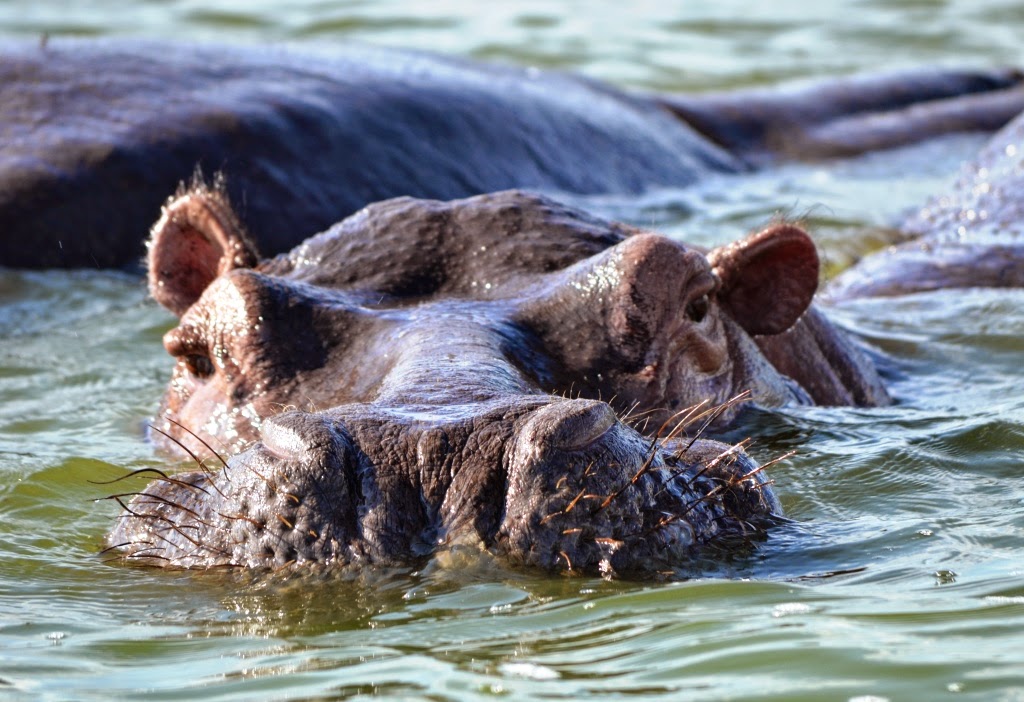
Mweya Safari lodge one of the Pearls in the Marasa Africa crown hovers over the Kazinga Channel below. This 32-kilometre long, natural channel that links Lake Edward and Lake George, and is a dominant feature in the Park. The channel attracts a varied range of animals and birds, with one of the world’s largest concentrations of hippos and numerous Nile crocodiles and an incredible array of birds.

Buffalo along the Kazinga channel 


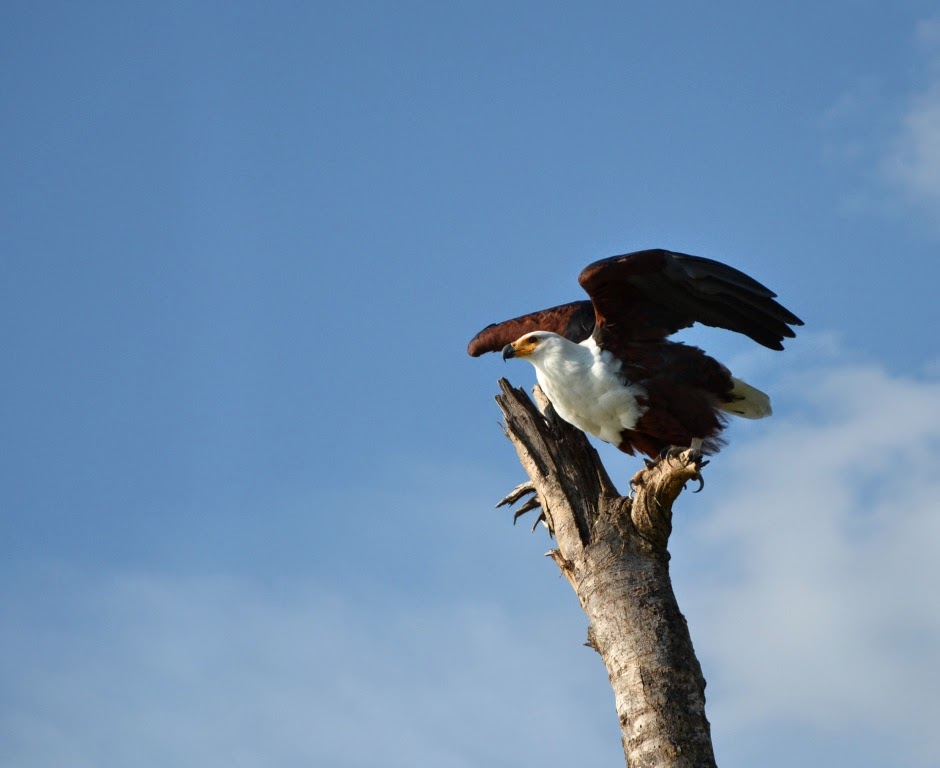
While travelling along the channel you are assured to encounter numerous fish eagles known for their very distinctive and some might say haunting call. These eagles are perched all along the channel ready to swoop down and grab fish from the water below.

Fish Eagle on perch by Corne Schalkwyk 


 It’s a spectacular sight to see them leave their perches or drag their catch to shore. But make no mistake this eagle will also catch monkeys or other birds and even crocodile hatchlings.

Take off by Corne Schalkwyk

Make sure to visit the peninsula in Queen Elizabeth to take in the spender of the reflecting water and its hidden gems.

Fish Eagle in Flight by Corne Schalkwyk 
   Uganda’s Queen Elizabeth National Park is truly a Medley of Wonders!

For bookings or information on the lodges contact Premier Safaris at www.premiersafaris.com or email reservations@premiersafaris.com

Mweya Safari lodge - www.marasa.net

Wednesday, 30 April 2014

Nature’s paintbrush!

Did nature just run out of paint or is there more too these fascinating spotted or white animals we encounter in nature?

Of late I have encountered some fascinating specimens of rarity, more notably in Uganda while on safari. I updated you on the case of the “pink hippo” that we encountered at Chobe Safari lodge….and yes Uganda also has a Chobe; I didn't lose my way and ended up in Botswana. The Uganda version is one of those must see places, especially if you wanted to photograph the rare Rothschild giraffe as the park is home to the remaining 70% of this rare subspecies. 


 Rothschild giraffe outside Chobe Safari lodge in Uganda by John Gibbons

This Chobe lodge is located in Murchison falls national park in Uganda along the Frothing river Nile, and was named after the area. In the local lingo Chobe refers to place without men, referring to old tribal wars that took the men from the area in days long gone. Marasa Africa rebuilt the lodge two years ago once Joseph Kony and his lords residence army was pushed out of the area and Uganda, making this unspoiled area accessible to tourism again. 

While visiting the lodge, we stumbled onto a hippo that was covered in white spots, making it appear pinkish and I was intrigued to hear from the local guides that is was not an isolated case in the park and that they have seen completely pink coloured hippos. This obviously got my attention and I tucked this little titbit away as we proceeded with the trip, determined to find out more.


 Photo - Spotted pink hippo in front of Chobe Safari lodge by Kim Allen

On a Safari to Queen Elizabeth national park in the weeks that followed we took clients on a water Safari down the Kazinga channel.  As we approached a bachelor herd of buffalo on the banks of the channel I noticed that it was a combination of both forest and Cape buffalo, which was new to me in itself. But even more peculiar was the very evident white stripe down the front of the one males face.


Photo - Both forest and cape buffalo found lazing together on the banks of the Kazinga Channel by Corne Schalkwyk.  

That was my first encounter with this buffalo bull, that I now know has been spotted in the area before by guides and the locals estimate that they first noticed him some five years before as a young calf.
On my return to the lodge, I sent some photos off to both Lex Hes and Anton Lategan of EcoTraining in the hopes that my old employers and mentors could shed some light on the curious case of the white faced buffalo.

 Photo - Curious case of the white faced buffalo by Corne Schalkwyk

In the weeks that followed I got some feedback from guides and EcoTraining on abnormalities and colour variations in wild animals. This also opened the door to discussions around possible inbreeding or interbreeding of wild animals and even domestic animals, as Uganda doesn’t have fences surrounding their national parks.

Not only did I learn a lot, it actually made me feel at home in Uganda as this was a normal part our office life at EcoTraining and to be truthful, something I missed in Uganda.

Genetic abnormalities are present in all wildlife. Even birds have white spots that appear to be a linked to albinism or leucism.  This is due to the fact that every animal, from cockroaches to apes makes melanin and can have albinism. Such animals normally fare poorly in the wild and don’t always survive long enough for us to enjoy or see them in the wild, but the occurrence of albinism runs the gamut across the animal kingdom.
Their rate of survival is virtually zero. Predators easily pick them out of a group. Families and social groups can exclude them because to every other member, they look foreign. The specimens we normally see are in captivity as their survival rate increases significantly in captivity.  When it comes to mating, some species fare better than others. The albino peacock attracts females just fine.


 "Pink Hippo" spotted on Safari at Paraa Safari lodge - Photo by Penny Boyd

Albinism derived from the word “white “is a congenital disorder characterized by the complete or partial absence of pigment in the skin, hair and eyes due to absence of the copper-containing enzyme involved in the production of melanin.

While speaking to my friends and co-workers at Marasa Africa and Premier Safaris in Uganda it became apparent that there has been some ongoing sightings of “Pink Hippo’s” in Uganda, Maanan even sent me this amazing photo taken by Penny Boyd of a completely pink hippo that they spotted on a game drive close to Paraa Safari lodge in Murchison falls national park in Uganda prior to me joining the team at Marasa.
The hippo we spotted at Chobe wasn’t an albino as it had dark eyes and some pigmented spots on its body. Therefore it is most likely that this is an example of a leucistic hippo.


 Photo - Another example from Lex Hes - Lex took this photo of a young Impala in South Africa 

 “Leucism is a condition characterized by reduced pigmentation in animals and humans. Unlike albinism, it is caused by a reduction in all types of skin pigment, not just melanin.” Different to most cases of albinism, leucistic animals generally retain some essence of their normal pigmentation. A partial expression of leucism can be exhibited in the form of an animal having spotted or piebald appearance. The skin appears pink; its coat or fur colour may vary from blond to beige to pure white. Uganda has some great examples of this as the photos have shown.

Leucistic and albino animals are also easily spotted by predators which greatly reduces their chances of survival. Fortunately, hippos are too big for most predators, and this is probably why we spot more of these examples of nature’s sometimes wondering brush.

Given the millions of different shades of colour that we see in nature, it’s no wonder that, once in a while, nature might simply run out of paint. Perhaps this is why pure-white or patched coloured animals leave such a strong impression on us. Some of them look like ghostly spirit animals, especially if encountered at night. Others, like albino whales or apes, are lonely one-in-a-million albinos with striking, unexpected appearances.
As a keen wildlife photographer, it is always exciting to photograph something a little bit different, or out of the ordinary and Uganda delivered on the unusual.

Whether you find them strange, beautiful, abnormal or freakish, I hope you enjoyed this update of Uganda sightings that nature…..just forgot to colour in its normal way.

By Corne Schalkwyk

Photo Credits: Penny Boyd, Lex Hes of EcoTraining, Kim Allen of Chobe Safari lodge, Corne Schalkwyk and John Gibbons 

If you would like some more information related to the update above or Uganda in general please see information below:

Travel to Uganda with Premier Safaris, visit their website at www.premiersafaris.com or contact reservations@premiersafaris.com .

Premier have a great upcoming photographic Safari with Albie Venter (also from EcoTraining) in June called the "Pearl of Africa" Photographic Safari to Uganda – http://www.premiersafaris.com/itineraries/%E2%80%9Cpearl-africa%E2%80%9D-photographic-trip

To learn about the Marasa Africa lodges in Uganda and Kenya, Including Mweya, Paraa and Chobe safari lodges mentioned above visit their website at www.marasa.net

EcoTraining - Nature Guide Training – Reconnecting you to the natural world through educational, exciting and life-changing wilderness experiences - www.ecoTraining.co.za

Also read the original update on the blog: http://travelcorne.blogspot.com/


Tip for the day - #Wildlifewednesday 

Take a holiday, and travel to the wild as fascinating experiences awaits you. You can always make more money but our untouched wilderness and exploration is fast slipping out of our grasp.