Showing posts with label Corne Schalkwyk. Show all posts

Monday, 2 March 2015

The sleeping lion emerges in East Africa

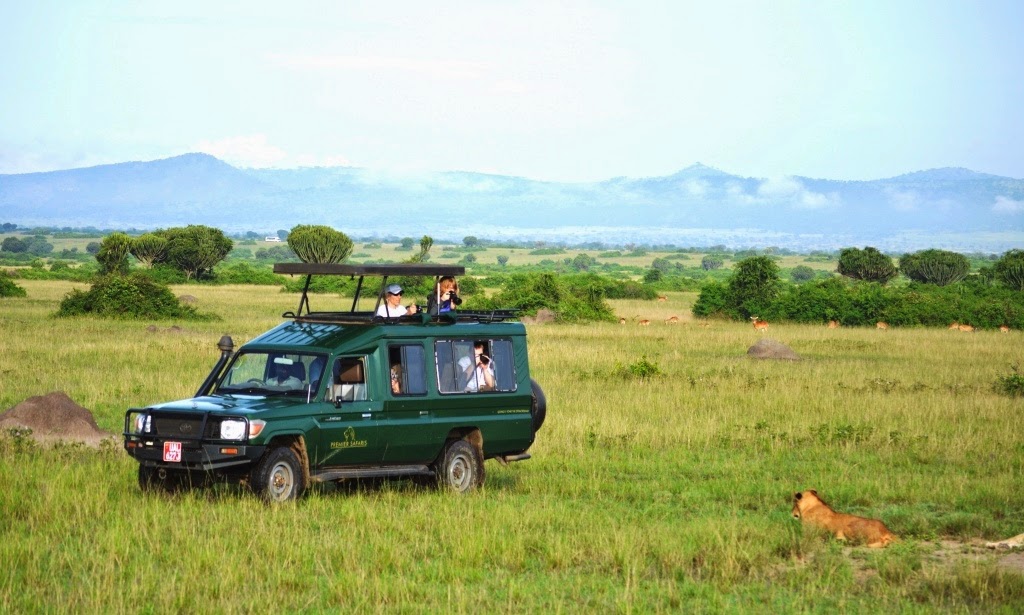
Lion on conservation drive by Corne Schalkwyk as part of Premier Safaris in Uganda 

We are all aware that last year was a very rough year for the East African tour operators as a barrage of negative press hit the East African region. This happened when Africa travel was actually at an all-time high and cough many of us off-guard, as a massive drop-off was the last thing east Africa was expecting. Especially the emerging destination Uganda, seen as the “pearl” of the East Africa offerings.

Uganda in 2012 showed remarkable growth in their tourism industry, even outgrowing major markets in Africa such as South Africa if taken as a percentage growth for the year in 2012. Lonely planet hailed it as the best destination for 2012. This was due to a sustained return in stability, security and a combination of some great marketing by the private sector investors in Uganda such as one of their larger tourism role players Marasa Africa as part of the Madhvani group of companies.  

Uganda Map www.johnstevenssafaris.com/
The country was finally on track and tourism became the single largest income earner for this "Pearl of Africa". This was followed by a great 2013 even throw there were worries about government implementing new taxis on Safari accommodation and how this would affect their forward bookings. In the case of 2013 calmer heads prevailed and government assisted the country and held back on implementing the tax. In many ways this assisted the private sector to invest in marketing and expansion of much needed new product offerings.  

Unfortunately 2014 turned into a bit of a horror show as government realized the potential funds that could be generated by taxing the small yet growing industry in this otherwise poor region and pounced on the fledgling industry when they were in need of funds, in some respects the tourism industry paid the price for the anti-gay bill that was introduced and then scraped in Uganda. Government funding dried up as external forces showed their dismay with the bill, and they made up the difference by taxing this emerging industry. 

Images that emerged as part of the Anti gay bill campaign internationally 
This new vat on accommodation at a hefty 18%, in turn sky-rocketed pricing and heavily impacted on the tour operators who tried to absorb the vat where possible to assist their clients and forward bookings into 2015. In some respects the industry that was most outspoken about the bill and its implications ended up paying the price of resistance.  

Unfortunately this was not the end of the regions problems. The Ebola crises hit the continent, and even throw the problem originated in West Africa thousands of kilometres away from Uganda. It hit the country already crippled by an anti- gay bill looming above its head and new taxes hard.

Combined with the new increased pricing, and an unofficial travel ban due to the gay bill in Uganda, Ebola became a last straw scenario, almost breaking the relatively new industry. Uganda also had to deal with some mostly irresponsible reporting on terrorism and security treats related to possible bomb blasts.....that never took place. We know that internationally there is an ongoing terrorism problem but east Africa didn't have the additional scope to overcome these in 2014. Although there were isolated threats to Uganda security in most part this was over-spill from their neighbour’s Kenya that was battling from serious security treats and bomb blasts that managed to bring its coastal tourism to its knees.
Premier Safaris experiential Lion conservation trip in Uganda 

 Mistakes and crises management from 2014, was harder to leave behind than expected and was clearly coming to the foreground in early 2015 when there was a serious lack of forward bookings due to cancellations and an almost unofficial travel ban to east Africa. Uganda was left with serious concerns related to closure of some tour operators, and downsizing within the industry. But the 2015 reality wasn't unforeseen by the larger investors such as Marasa Africa, that also has properties within Kenya. 
Marasa Africa clients #TravelToUganda campaign 
 By late 2014 larger private tourism investors in Uganda began to address some of the issues in response to the fact that they noticed that tourist sees Africa as one country, this was echoed by feedback from many tour operators. It was clear that people didn't know where Uganda was, especially in relation to West Africa. They also didn't know that in some cases Europe was actually closer to the hot zone than Kenya or Uganda. And unfortunately Uganda was also included with Kenya when it came to risk assessment done by potential tourists as it’s a major add on to Kenya Safaris. Marasa Africa tried to address this with an “Africa is not one continent campaign”, while sending out images of tourists enjoying their lodges without fear of Ebola.
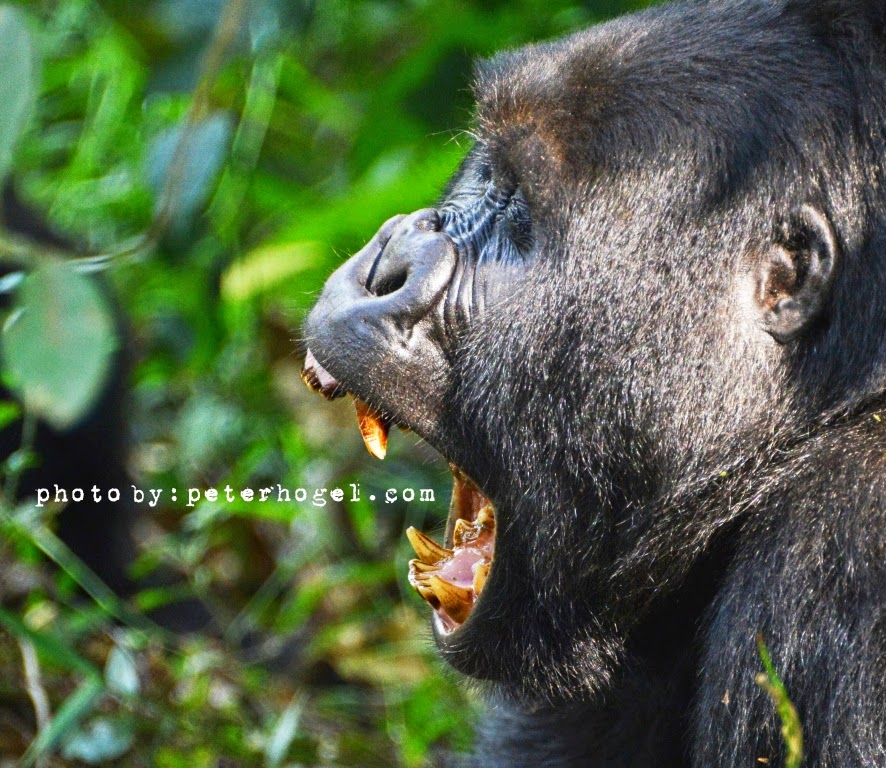
Gorilla Safari experience as part of Uganda Tourism board and Marasa  - Photo by Peter Hogel 


For years Uganda was the Gorilla Safari add on to a Kenya migration trip. Jinja along the Nile, was the adventure and backpacker “White water rafting" section that can be combined with a Kenya Safari. As Uganda started too emerged as a stand-alone destination, it still had to deal with old perceptions and a lack of longstanding quality destination marketing.

This is starting to change and not only did the heavily underfunded country of Uganda make it through some of the worst times East Africa tourism has endured in recent years, it is showing signs of healing and new re-emerging .
Murchison falls in Uganda  
After having discussions with major tourism destination marketers around the world it became clear that it was only a matter of time and some much needed  investment in specialist skills needed to market the country, before this sleeping lion awakes. Hanna, the owner of the internationally renowned PR and tourism marketing company KPRN in Germany mentioned that we would be surprised as to what will happen if the right company gets hold of this lion and wakes such a sleeping lion.

It would seem that there is a nudging at this sleeping lion as last minute enquirers are coming in to the country and companies with good reputations and quality guides are once again coming to life in Uganda. Even the more skittish US market, is returning to Uganda to ensure they get a piece of the biodiversity the country offers.
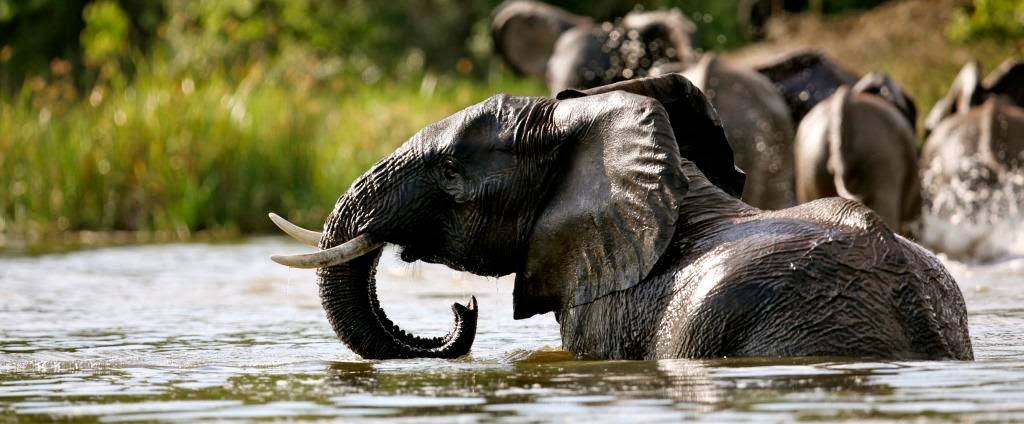
Nile delta in Uganda close to the Marasa Africa lodge Paraa Safari lodge 

 It’s hard to match Uganda's range of biomes and activities and experiences elsewhere, even in east Africa. It’s long been described as the sample board of Africa, having pieces of almost every country within Africa in one small spot.
View over Guiding mountain from Clouds lodge used by Premier for gorilla trekking 


Uganda is bound to step out, and show Africa its plumage. It is after all the capital of Africa’s birding with a staggering more than 1000 species. This is the highest concentration of birds found in Africa (more than 50% of the total species found on the continent), and is the most accessible place to see the legendary Shoebill.
Kazinga Channel one of Uganda's hot-spots for birding by Corne Schalkwyk 


This abundance of species combined with its already well known primate offering including the largest numbers of the critically endangered mountain gorillas is going to be a force to deal with when it emerges from its sleep.
Remote, bespoke experiences awaits in unspoiled parks teeming with wildlife in Uganda 


 Hopefully we will once again see the old colonial safari destination that combined glaciers treks in the Ruwenzori with great outstretched savannah safaris along the Nile and the Kazinga channel in Uganda.
The sleeping lion is growing up and showing its teeth - Uganda Tourism by Jonothan Hen-Boisen


Kenya is also showing good recovery and it’s definitely “open for business” as usual, 2015 might just be the year of recovery for East Africa. 

Below are some of the exciting new products emerging form Uganda about to take the industry by storm. These include Hot air balloon Safaris over the crater lakes of the rift valley from Mweya Safari lodge, Specialist programmes by Premier Safaris that made it to the list of best Bucket list Safaris for CNN travel readers in 2015 and many more experiential travel options being released this year. 
Hot air Balloon Safaris over Queen Elizabeth National park with a bush breakfast from Mweya Safari lodge 

Premier photographic trips led by Albie Venter - These trips include night time searches for nocturnal delights of Uganda 


Intimate Gorilla with Premier and CTPH
Even the gorillas gave Uganda a thumbs up, as their numbers have been steadily increasing with the borders secured. This is an incredible success story for conservation that almost lost one of our most endangered species. The CTPH has even managed to reach the local community surrounding the gorilla sanctuaries and has reported a decrease in the human birth rates by means of an educational campaign to teach about contraception and the benefits of smaller households. 

Some links related to the information used for this blog update: 
Premier Safaris website

Premier Safaris conservation partner in Uganda CTPH - conservation through public health: http://www.ctph.org/

Marasa Africa Lodges: www.marasa.net  
Uganda Tourism: http://www.visituganda.com/
PM

Intimate Gorilla Safaris with Premier Safaris as mentioned by CNN Travel  - Image by Jonothan Hen-Boisen


Thursday, 19 June 2014

Live your journey

The DSTV team of KykNet recently travelled to Uganda to visit with myself and our team at Marasa Africa who own some of the most impressive properties within the national parks in Uganda. Gerrie Pretorius, a well-known singer and presenter of “leef jou Reis” traversed Uganda to get to know its special places and to sample and even learn how to prepare its traditional dishes.
Gerrie Pretorius with one of Premier Safaris collectible walking sticks to tackle the gorilla trek 


The programme focuses on experiences and wants their viewers to really learn about the countries that they visit.
Gerrie Pretorius from "Leef jou reis" and Corne Schalkwyk from Marasa Africa at Silverback lodge  

As part of the trip they turned at the source of the Nile in Jinja town where they were hosted by the newly opened Jinja sailing club on arrival before making their way west following the tourism route created by Premier Safaris aptly named the western wonderland tour.

Below are some of the photos from their visit to Bwindi impenetrable forest as part of their visit to silverback lodge overlooking the enchanting Bwindi Impenetrable National Park in south-western Uganda. The lodge is on the edge of the Rift Valley. Its mist-covered hillsides are blanketed by one of Uganda's oldest and most biologically diverse rainforests, which dates back over 25,000 years and contains almost 400 species of plants. More famously, this “impenetrable forest” also protects an estimated 420 mountain gorillas, roughly half of the world’s population, including several habituated groups, which can be tracked.
Missed covered views from Silverback Lodge 


This biologically diverse region also provides shelter to a further 120 mammals, including several primate species such as baboons and chimpanzees, as well as elephants and antelopes. There are around 350 species of birds hosted in this forest, including 23 Albertine Rift endemics.
Gerrie Pretorius searching for Gorillas


The neighbouring towns of Buhoma and Nkuringo both have an impressive array of luxury lodges, rustic bandas and budget campsites, as well as restaurants, craft stalls and guiding services.


Opportunities abound to discover the local Bakiga and Batwa Pygmy cultures through performances, workshops and village walks.

Remember to tune into DSTV (KykNet) tomorrow evening for the 2nd episode on Uganda with myself and Gerrie Pretorius at one of our Marasa Africa lodges Silverback Lodge


Here is a small teaser of the series on DSTV (KyKNet Channel 144)


Get more information on Premier Safaris at www.premiersafaris.com or have a look at the western wonderland trip that the team experienced. 

Want to know more about the Marasa Africa Lodges in Uganda and Kenya? visit their website at www.marasa.net 

Views from Silverback lodge in Uganda 


Wednesday, 30 April 2014

Nature’s paintbrush!

Did nature just run out of paint or is there more too these fascinating spotted or white animals we encounter in nature?

Of late I have encountered some fascinating specimens of rarity, more notably in Uganda while on safari. I updated you on the case of the “pink hippo” that we encountered at Chobe Safari lodge….and yes Uganda also has a Chobe; I didn't lose my way and ended up in Botswana. The Uganda version is one of those must see places, especially if you wanted to photograph the rare Rothschild giraffe as the park is home to the remaining 70% of this rare subspecies. 


 Rothschild giraffe outside Chobe Safari lodge in Uganda by John Gibbons

This Chobe lodge is located in Murchison falls national park in Uganda along the Frothing river Nile, and was named after the area. In the local lingo Chobe refers to place without men, referring to old tribal wars that took the men from the area in days long gone. Marasa Africa rebuilt the lodge two years ago once Joseph Kony and his lords residence army was pushed out of the area and Uganda, making this unspoiled area accessible to tourism again. 

While visiting the lodge, we stumbled onto a hippo that was covered in white spots, making it appear pinkish and I was intrigued to hear from the local guides that is was not an isolated case in the park and that they have seen completely pink coloured hippos. This obviously got my attention and I tucked this little titbit away as we proceeded with the trip, determined to find out more.


 Photo - Spotted pink hippo in front of Chobe Safari lodge by Kim Allen

On a Safari to Queen Elizabeth national park in the weeks that followed we took clients on a water Safari down the Kazinga channel.  As we approached a bachelor herd of buffalo on the banks of the channel I noticed that it was a combination of both forest and Cape buffalo, which was new to me in itself. But even more peculiar was the very evident white stripe down the front of the one males face.


Photo - Both forest and cape buffalo found lazing together on the banks of the Kazinga Channel by Corne Schalkwyk.  

That was my first encounter with this buffalo bull, that I now know has been spotted in the area before by guides and the locals estimate that they first noticed him some five years before as a young calf.
On my return to the lodge, I sent some photos off to both Lex Hes and Anton Lategan of EcoTraining in the hopes that my old employers and mentors could shed some light on the curious case of the white faced buffalo.

 Photo - Curious case of the white faced buffalo by Corne Schalkwyk

In the weeks that followed I got some feedback from guides and EcoTraining on abnormalities and colour variations in wild animals. This also opened the door to discussions around possible inbreeding or interbreeding of wild animals and even domestic animals, as Uganda doesn’t have fences surrounding their national parks.

Not only did I learn a lot, it actually made me feel at home in Uganda as this was a normal part our office life at EcoTraining and to be truthful, something I missed in Uganda.

Genetic abnormalities are present in all wildlife. Even birds have white spots that appear to be a linked to albinism or leucism.  This is due to the fact that every animal, from cockroaches to apes makes melanin and can have albinism. Such animals normally fare poorly in the wild and don’t always survive long enough for us to enjoy or see them in the wild, but the occurrence of albinism runs the gamut across the animal kingdom.
Their rate of survival is virtually zero. Predators easily pick them out of a group. Families and social groups can exclude them because to every other member, they look foreign. The specimens we normally see are in captivity as their survival rate increases significantly in captivity.  When it comes to mating, some species fare better than others. The albino peacock attracts females just fine.


 "Pink Hippo" spotted on Safari at Paraa Safari lodge - Photo by Penny Boyd

Albinism derived from the word “white “is a congenital disorder characterized by the complete or partial absence of pigment in the skin, hair and eyes due to absence of the copper-containing enzyme involved in the production of melanin.

While speaking to my friends and co-workers at Marasa Africa and Premier Safaris in Uganda it became apparent that there has been some ongoing sightings of “Pink Hippo’s” in Uganda, Maanan even sent me this amazing photo taken by Penny Boyd of a completely pink hippo that they spotted on a game drive close to Paraa Safari lodge in Murchison falls national park in Uganda prior to me joining the team at Marasa.
The hippo we spotted at Chobe wasn’t an albino as it had dark eyes and some pigmented spots on its body. Therefore it is most likely that this is an example of a leucistic hippo.


 Photo - Another example from Lex Hes - Lex took this photo of a young Impala in South Africa 

 “Leucism is a condition characterized by reduced pigmentation in animals and humans. Unlike albinism, it is caused by a reduction in all types of skin pigment, not just melanin.” Different to most cases of albinism, leucistic animals generally retain some essence of their normal pigmentation. A partial expression of leucism can be exhibited in the form of an animal having spotted or piebald appearance. The skin appears pink; its coat or fur colour may vary from blond to beige to pure white. Uganda has some great examples of this as the photos have shown.

Leucistic and albino animals are also easily spotted by predators which greatly reduces their chances of survival. Fortunately, hippos are too big for most predators, and this is probably why we spot more of these examples of nature’s sometimes wondering brush.

Given the millions of different shades of colour that we see in nature, it’s no wonder that, once in a while, nature might simply run out of paint. Perhaps this is why pure-white or patched coloured animals leave such a strong impression on us. Some of them look like ghostly spirit animals, especially if encountered at night. Others, like albino whales or apes, are lonely one-in-a-million albinos with striking, unexpected appearances.
As a keen wildlife photographer, it is always exciting to photograph something a little bit different, or out of the ordinary and Uganda delivered on the unusual.

Whether you find them strange, beautiful, abnormal or freakish, I hope you enjoyed this update of Uganda sightings that nature…..just forgot to colour in its normal way.

By Corne Schalkwyk

Photo Credits: Penny Boyd, Lex Hes of EcoTraining, Kim Allen of Chobe Safari lodge, Corne Schalkwyk and John Gibbons 

If you would like some more information related to the update above or Uganda in general please see information below:

Travel to Uganda with Premier Safaris, visit their website at www.premiersafaris.com or contact reservations@premiersafaris.com .

Premier have a great upcoming photographic Safari with Albie Venter (also from EcoTraining) in June called the "Pearl of Africa" Photographic Safari to Uganda – http://www.premiersafaris.com/itineraries/%E2%80%9Cpearl-africa%E2%80%9D-photographic-trip

To learn about the Marasa Africa lodges in Uganda and Kenya, Including Mweya, Paraa and Chobe safari lodges mentioned above visit their website at www.marasa.net

EcoTraining - Nature Guide Training – Reconnecting you to the natural world through educational, exciting and life-changing wilderness experiences - www.ecoTraining.co.za

Also read the original update on the blog: http://travelcorne.blogspot.com/


Tip for the day - #Wildlifewednesday 

Take a holiday, and travel to the wild as fascinating experiences awaits you. You can always make more money but our untouched wilderness and exploration is fast slipping out of our grasp. 


Monday, 28 April 2014

Lake hopping in Uganda

Encounter the Crater lakes of Uganda 


Uganda can easily be called the “land of lakes” as almost a third of this microcosm of Africa is covered by water. For the water lovers amongst you, this destination in East Africa is pure bliss.

Lake Victoria, the largest lake in Africa, dominates the southern border of the country while Lakes Edward and Albert lie to the west but it doesn't end there.  Other lakes and more spectacularly the crater lakes are dotted around Uganda like the pearls in its spectacular necklace.

A great adventure awaits the traveller to its waters, from white water rafting, which has caught on as a popular tourist activity, especially on the River Nile to boat Safaris and river cruises. One can also try your hand at bungee jumping into the waters of the Nile below. Other popular activities include sport fishing safaris and sailing.

I decided to provide a glimpse into some of these spectacular “pearls”, and went for my favourites the lesser known crater lakes.

These crater lakes are large holes in the ground or a surface caused by an explosion/volcanic eruption.  Lakes located in dormant or extinct volcanoes tend to have fresh water, and the water clarity in such lakes can be exceptional due to the lack of in-flowing streams and sediment.
Several extinct volcanoes of a specifically violent type called the ‘explosion craters’ are found within western Uganda.


 Photo from National Geographic - Queen Elizabeth Crater lakes 

Most of these crater lakes are located in the Western Rift, also called the Albertine Rift, edged by some of the highest mountains in Africa, including the beautiful Rwenzori mountain chain in Uganda,  the Virunga Mountains of Rwanda and Mitumba Mountains in Eastern Congo (DRC), west of lake Tanganyika.
Personally I prefer to head straight for Queen Elizabeth national park that hosts 5 crater lakes amongst its incredible varied biomes. (Visit Mweya Safari lodge – www.marasa.net

Some of my favourite crater Lakes in Uganda.

Lake Bunyonyi
Or also called  “lake of many little birds", is located about 13 kilometres away from Kabale town. This bilharzia free lake, is great for swimming and makes a popular day trip from Kabale. Its also the second deepest lake in Africa at around 900 m deep. The lake is dotted by lots of small islands (29 of them) that gives it a magical almost fairy-tale like feel.


The setting sun painting lake Bunyonyi's waters red in between a myriad of tiny islands Photo Credit Luis Azoy 

Lake Katwe   
This one is a salt lake in Queen Elizabeth national park on route to Mweya Safari lodge. The lake is known throughout Uganda as an area of salt production and indeed has been producing high-quality salt for many years. The first written reports of salt production on Lake Katwe came from first European explorers to Uganda - John Speke in 1863 and Grant James in 1864, who described the product as perfectly pure in colour and state.

More importantly for the tourist visiting Uganda, it’s also known for the flamingos that visit during their migration.

Photo credit:  Evaporation fields, Katwe Salt Lake, Queen Elizabeth NP /Photo Credit: Joshua Wiese

Lake Nkuruba
Lake Nkuruba offers the perfect base to indulge in chimp trekking in the nearby Kibale National Park or to explore one of the world's densest concentrations of volcanic crater lakes. Or for those looking for a few nights rest away from it all. This is a great spot for swimming or for those wanting to spot red tailed monkeys or black and white colobus monkeys that are known to run around the lawns in a very surprising laid back manner.


Photo Credit- Crater Lake, Nkuruba. Photo Credit Shanidov

Lake Kyaninga
Set against a stunning backdrop of the legendary Mountains of the Moon is Kyaninga, or as I refer to it the peaceful lake. For accommodation and plenty of great hikes around the area, you can always book in at the upmarket Kyaninga lodge.

When Englishman Steve Williams first saw the lake on his way to visit the gorillas, there was nothing there aside from unspoilt natural beauty and breath-taking vistas. There aren’t many people who could stand on the rim of an ancient crater lake thousands of miles from home, and have the vision to imagine building a luxury lodge entirely out of timber on that very spot. www.kyaningalodge.com


 Photo credit - Rose & Fitzgerald dairy - also see website link at the end.

Lake Nyinambuga
Situated South of Lake Nkuruba, Lake Nyinambuga is a crater lake and is located in Kabarole District, Western Region, Uganda. The estimate terrain elevation above sea level is 1389 metres
The comfortable and luxurious Ndali Lodge is set on a narrow ridge overlooking this aquamarine coloured lake a 100 metres below. The lodge has stunning all-round views of the mountains to the west, the Rift Valley lakes to the south and the crater lakes to the east and north. www.ndalilodge.com
Lake Nyamusingire


 View from Ndali lodge over Lake Nyinambuga/Photo Credit: Safari-Partners

Lake Nyamusigire
Also commonly written as “Nyamusingiri” is Uganda’s largest crater lake. The lake is situated on the edge of Maramagambo Forest south of Queen Elizabeth National Park. 
Whimsical black-and-white colobus monkeys play in the trees around Jacana Lodge, and baboons are never far away. You can also arrange trails and boat rides with the lodge.


Photo Credit - Sunset over Nyamusigire by Mike Gadd


Photo credit - Jacana-lodge-lake-view

Lake Nyabikere
Lake Nyabikere, which means “LAKE OF FROGS”, is only 13km from Fort Portal on Kamwenge Road, and just 100m off the main road at the edge of Kibale Forest National Park. Swimming is possible. Boat trips on the lake can be organized with local fishermen.


A fisherman on a reed float at Lake Nyabikere/Photo Credit: Rebecca Genevive

Lake Nkugute
This mysterious lake shrouded in myth is located along Mbarara-Kasese highway within the newly-created Rubirizi District, Bunyarugu County. Nkugute which means “swallow” is believed to have been formed 12,000 years. This is evidenced by the existence of hot springs. Much talk about the myth that the lake used to swallow children every year…..as the story goes it would be one boy and one girl every year.

Why head for Queen Elisabeth national park?
If you are interested in water Safaris and crater lakes it’s an ideal spot to include game drives as part of your lake exploration. One of the best spots to use as a home base within the national park is Mweya Safari lodge one of the Marasa Africa properties in Uganda. (www.marasa.net )

The lodge overlooks the Kazinga Channel that links lake Edward with Lake George and it has the greatest density of hippos in Africa, not to mention plentiful crocodile, elephants and water birds.
Queen Elizabeth Park is renowned for its variety of big game and plains wildlife such as buffalo, warthog, leopard and lion. Antelope abound, too, including Ugandan kob, defassa, waterbuck and bushbuck. This park is also fantastic for birding and butterfly viewing. Hardy adventurers can make the 10-mile trek into Kyambura Gorge to see chimpanzees and red-tailed monkeys.


 For more information on Uganda national parks as well as package tours to Uganda and Rwanda contact Premier Safaris at reservations@premiersafaris.com or visit their website at www.premiersafaris.com 

Map of Uganda lakes 

Marasa Africa Lodges in Uganda and Kenya including Mweya Safari lodge featured here - www.marasa.net 


Wednesday, 16 April 2014

Meet the sheriff

We tend to concentrate on the big and harries, and forget about the smaller reptiles and birds.
Today I wanted to write about birds and decided to go right for the big boy, the sheriff amongst birds so to speak. This bird is bound to get even the non-birders attention. The Martial Eagle, the largest eagle in Africa and one of the most impressive birds to encounter while on safari.


They are the largest of the African eagles and incredibly powerful, capable of knocking an adult man off his feet. They reputedly have enough power in one foot to break a man's arm. The largest eagle in Africa and one of the largest in the world, the Martial eagle weighs in at almost 6.5 Kg. The upperparts are dark brown with a white belly with black streaks; the legs are white and have very large talons. The immature bird looks quite different from the adult. The adult eagle has a body length of between 78 and 86 cms , a wingspan between 1.9 and 2.6 m

In some areas birds form an important part of the diet, including guineafowl, francolins, bustards, and poultry. Birds as large as a European Stork are recorded to have fallen prey to the Martial Eagle.
Martial Eagles feed on gamebirds, hares, hyraxes, small antelopes, monitor lizards and other medium sized vertebrates. Nests are built invariably in trees, high above ground, but often in the largest tree in the area, growing on a steep hillside or in a gorge, where the bird has a clear sweep off the nest. Martial Eagles form monogamous pairs and they usually mate for life. Pairs tend to breed once every two years and the breeding season correlates with the dry season across their geographic range. Females lay 1 - 2 eggs and incubation takes approximately 45 - 50 days. Between 90 and 100 days after hatching the youngsters are ready to fledge.


They prefer uninhabited stretches of thornbush and savannah found over much of Africa, occurring also in open plains and semi-desert country. It spends much of its time on the wing, and is usually seen soaring about hill slopes, often at a very great height rendering it almost invisible to the naked eye. Early in the morning before it takes to the wing for the day, or in the evening prior to roosting it can be seen perched in trees.


Interesting Facts: Martial Eagles are the only member of the genus Polemaetus.

These photos were taken by Corne Schalkwyk during a visit to Mweya Safari lodge – while on Safari with Premier Safaris in Uganda.


Birding Safaris in Uganda  - Premier Safaris  visit www.premiersafaris.com or email reservations@premiersafaris.com 
To visit the lodge: Mweya Safari lodge is part of the Marasa Africa Group of lodges www.marasa.net 

Saturday, 29 March 2014

Our "Pink" encounter

Recently we have been stumbling onto the unique and weird wildlife that Uganda has been hiding from us up to now.  All animals are obviously not created equally, but this reminded me off some interesting facts related to these animals as well as the abnormalities that occur in nature.

Hippos are a lot cooler than we normally allow for. In fact, hippos never sweat. Not because they’re so calm and collected, although that might be true. Quite literally, hippos do not produce sweat. The reddish-orange stuff that does emerge from large pores deep in their skin might look like sweat and in some cases are referred to as blood or bloodlike due to its appearance, but according to a study by two Japanese scientists, hippo goop is a combination of anti-biotic and sunscreen.

The red hipposudoric acid, and the orange norhipposudoric acid. Both are conjugated three-ring structures. The two compounds absorb light in the UV-visible range (200-600 nm) and so are thought to protect the hippo's dermis from the sun. Additionally, low concentrations of hipposudoric acid inhibit the growth of bacteria. Both compounds are highly reactive, and tend to polymerize when removed from the hippo and/or a water source. An unknown agent in hippo mucus keeps the compounds from polymerizing for several hours, even after the hippo sweat dries."

After analysing the stuff in the lab, the scientists found that the pigments that give hippo goop its reddish colour are highly acidic and help keep certain kinds of harmful bacteria from growing. That probably explains why hippos can sustain gashes and injuries during fights with other hippos and not suffer from infection.
The scientists also found that the goop absorbs the sun’s ultraviolet rays, which can cause sunburn and skin cancer. So hippos enjoy a kind of natural sunscreen.

If we apply this to the philosophy that one can learn from nature and or imitate nature surely we would be able to learn from this to produce a natural sunscreen that humans can use to deal with that deadly African sun. Maybe even use Hippo goop the next time you go under the knife to help you heal.

But as I mentioned not all hippos are created equal.  We spotted this almost pink hippo at Chobe Safari lodge in Uganda and I couldn’t help but wonder what happened here? It’s is definitely not an albino, maybe a case of “leucistic hippo." I was aware of an odd-looking hippo encountered in the Mara that has a condition called leucism, which occurs when the skin produces less pigment than usual, making it appear pinkish.


It still amazes me how often nature reveals something unexpected, and truly amazing!

What do you think? Sunburn, Sweat or Leucistic?

Thanks Kim Allen (GM at Chobe Safari lodge Uganda). Corne Schalkwyk (Premier Safaris)
www.marasa.net
www.premiersafaris.com 

Thursday, 24 October 2013

And the award goes to……


World Travel Award as Africa's leading Green Hotel for 2013 Goes to Aberdare Country Club In Kenya.

Aberdare Country Club one of Marasa Africa’s Kenya properties received the World Travel Award as Africa's leading Green Hotel 2013 . The award was presented to the Kenya team by Graham Cooke , President ,WTA in Nairobi during the ceremony held at Safari Park Hotel on 16th October this year.


The Aberdare Country Club started out as a property given to a lord by the King of England. Back in the 'twenties, it was built and nurtured by the lord and his family in a grand colonial style. Part of its beauty was its surroundings of huge acreage—hills, animals, and the natural beauty that is the Aberdare forest and surrounding areas.

  Almost a half century later, their home, "The Steep", was renamed the Aberdare Country Club and opened for guests. Considered a heritage property in Kenya, The Aberdare Country Club has retained the charm of a private home with the simple comforts of a country inn.

 This “Haven in the Hills”...The Aberdare Country Club, only a two and a half hour drive northeast from Nairobi, is nestled on a slope of Mweiga Hill in the Aberdare Highlands, part of the Great Rift Valley


All the rooms at The Aberdare Country Club are in the form of cottages and one standard suite.
The Aberdare 1300-acre game sanctuary with free roaming game such as giraffes, zebras, Elands, Impalas, Warthogs, and baboons is the main activity that surrounds the lodge. 

With altitudes ranging from 7,000 feet to 14,000 feet above sea level, the Aberdare National Park is located 260 kilometres (162 miles) from Nairobi. Since the 1950's, Aberdare National Park has been a major attraction and continues to be a favourite destination of travellers who love the outdoors and wildlife.

For the golfer in you there is also a 9-hole Golf Course within the Game Sanctuary. Guests can bring their own clubs or hire them from the Club.

 The unique and wonderful thing about the golf course at the Club is that you can tee off amidst the wildlife that wonders on the course to forage for food.

I also previously reported on the wild dog hunt that surrounded some unsuspecting golfers at the club earlier this year when they pulled down an Impala on the golf course - “Priceless”