Showing posts with label Best Safari Destinations. Show all posts

Tuesday, 28 July 2015

"Donnie" the little engine that could

The little engine that could

Debbie English, who is in her fourth year of veterinary science at Onderstepoort, posted some touching photos this weekend of a little rhino calf who was stranded without its mother. And we followed the story.
In a bizarre incident in South Africa, visitors to Kruger national park encountered a very young lost Rhino that sought out their vehicle for support. It was later confirmed that the young calf of just over a year old was separated from its mother when the mother was killed in yet another poaching incident in the park.

Young rhino imprint on their mothers and it’s probably no coincidence that the vehicle had a similar colouration to that of rhinos. It was incredibly sad to see the little one adopting the greyish vehicle as its mom, and not wanting to leave the vehicle asking for support.  You could not help but think of the terrible circumstances that led to this moment and its journey in search of help, and the luck involved in encountering a tourism road and a familiar grey coloured vehicle.

Imprinting is regularly seen by safari guides in many animal species, when they lose their mother, with some baby wildebeest running for kilometres to keep up with their new “mom” as a safari vehicle drives away.

Debbie’s father Don English, a Regional Ranger for Marula South Region, together with the veterinarian managed to tranquilize the tiny rhino and fly him to a new home.

He was named after the Kruger Park’s regional ranger, Don English, who, along with a veterinarian, came to his aid.

This however didn’t go without its hiccups along the route, proving once again that this little guy is not only special but had all its angels on-board.

The pilot had to make an emergency landing after this little Donnie, as he was referred to by now, flat-lined. After 3 minutes of resuscitation and trying everything to save him... everyone involved was amazed (some with tear filled eyes) when he gasped for air and his little heart started up again. After a rough ride he finally made it to his new home where he probably had a good snooze and is now hopefully settled in.


The public don't often hear about successes like these so I would like to share this happy ending with you and ask to support our rangers, veterinarians and all the other special people involved in the fight against rhino poaching!


Thanks Debbie, for this incredible feel good story that highlights not only the plight of our Rhino, but also the amazing people on the ground that work tirelessly to save our endangered “Donnies” out there in the bush! 

Where is he now? 

The story has a somewhat happy ending though, because he is now being looked after by Care for Wild Africa, an organisation that rehabilitates wild animals on a reserve in Mpumalanga.
“He’s doing very well. He drank all his milk and he’s walking around,” the organisation’s Marnelle van der Merwe said on Monday.
IF YOU WOULD LIKE TO HELP:
If you are interested in sponsoring or donating to Care for Wild Africa, they would so appreciate it, and it would help so many of the little rhinos who end up here. “They do an absolutely incredible job,” says Debbie.
Care for Wild Africa website: http://www.careforwild.co.za/ 
Source and images Debbie English: https://www.facebook.com/debbie.english.1654 

Some more Images 

Monday, 2 March 2015

The sleeping lion emerges in East Africa

Lion on conservation drive by Corne Schalkwyk as part of Premier Safaris in Uganda 

We are all aware that last year was a very rough year for the East African tour operators as a barrage of negative press hit the East African region. This happened when Africa travel was actually at an all-time high and cough many of us off-guard, as a massive drop-off was the last thing east Africa was expecting. Especially the emerging destination Uganda, seen as the “pearl” of the East Africa offerings.

Uganda in 2012 showed remarkable growth in their tourism industry, even outgrowing major markets in Africa such as South Africa if taken as a percentage growth for the year in 2012. Lonely planet hailed it as the best destination for 2012. This was due to a sustained return in stability, security and a combination of some great marketing by the private sector investors in Uganda such as one of their larger tourism role players Marasa Africa as part of the Madhvani group of companies.  

Uganda Map www.johnstevenssafaris.com/
The country was finally on track and tourism became the single largest income earner for this "Pearl of Africa". This was followed by a great 2013 even throw there were worries about government implementing new taxis on Safari accommodation and how this would affect their forward bookings. In the case of 2013 calmer heads prevailed and government assisted the country and held back on implementing the tax. In many ways this assisted the private sector to invest in marketing and expansion of much needed new product offerings.  

Unfortunately 2014 turned into a bit of a horror show as government realized the potential funds that could be generated by taxing the small yet growing industry in this otherwise poor region and pounced on the fledgling industry when they were in need of funds, in some respects the tourism industry paid the price for the anti-gay bill that was introduced and then scraped in Uganda. Government funding dried up as external forces showed their dismay with the bill, and they made up the difference by taxing this emerging industry. 

Images that emerged as part of the Anti gay bill campaign internationally 
This new vat on accommodation at a hefty 18%, in turn sky-rocketed pricing and heavily impacted on the tour operators who tried to absorb the vat where possible to assist their clients and forward bookings into 2015. In some respects the industry that was most outspoken about the bill and its implications ended up paying the price of resistance.  

Unfortunately this was not the end of the regions problems. The Ebola crises hit the continent, and even throw the problem originated in West Africa thousands of kilometres away from Uganda. It hit the country already crippled by an anti- gay bill looming above its head and new taxes hard.

Combined with the new increased pricing, and an unofficial travel ban due to the gay bill in Uganda, Ebola became a last straw scenario, almost breaking the relatively new industry. Uganda also had to deal with some mostly irresponsible reporting on terrorism and security treats related to possible bomb blasts.....that never took place. We know that internationally there is an ongoing terrorism problem but east Africa didn't have the additional scope to overcome these in 2014. Although there were isolated threats to Uganda security in most part this was over-spill from their neighbour’s Kenya that was battling from serious security treats and bomb blasts that managed to bring its coastal tourism to its knees.
Premier Safaris experiential Lion conservation trip in Uganda 

 Mistakes and crises management from 2014, was harder to leave behind than expected and was clearly coming to the foreground in early 2015 when there was a serious lack of forward bookings due to cancellations and an almost unofficial travel ban to east Africa. Uganda was left with serious concerns related to closure of some tour operators, and downsizing within the industry. But the 2015 reality wasn't unforeseen by the larger investors such as Marasa Africa, that also has properties within Kenya. 
Marasa Africa clients #TravelToUganda campaign 
 By late 2014 larger private tourism investors in Uganda began to address some of the issues in response to the fact that they noticed that tourist sees Africa as one country, this was echoed by feedback from many tour operators. It was clear that people didn't know where Uganda was, especially in relation to West Africa. They also didn't know that in some cases Europe was actually closer to the hot zone than Kenya or Uganda. And unfortunately Uganda was also included with Kenya when it came to risk assessment done by potential tourists as it’s a major add on to Kenya Safaris. Marasa Africa tried to address this with an “Africa is not one continent campaign”, while sending out images of tourists enjoying their lodges without fear of Ebola.
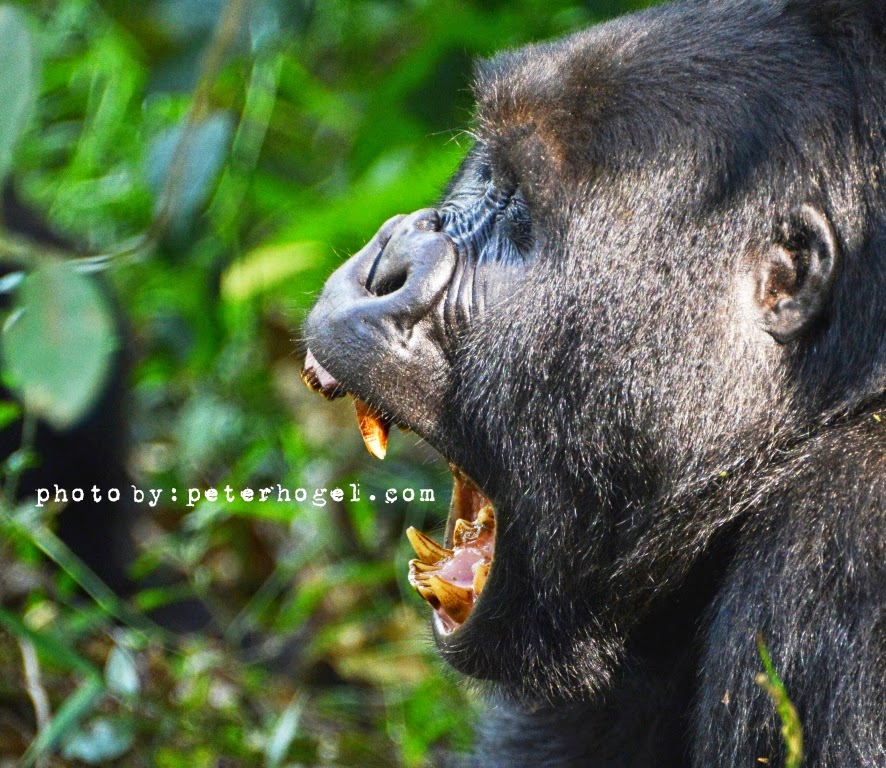
Gorilla Safari experience as part of Uganda Tourism board and Marasa  - Photo by Peter Hogel 


For years Uganda was the Gorilla Safari add on to a Kenya migration trip. Jinja along the Nile, was the adventure and backpacker “White water rafting" section that can be combined with a Kenya Safari. As Uganda started too emerged as a stand-alone destination, it still had to deal with old perceptions and a lack of longstanding quality destination marketing.

This is starting to change and not only did the heavily underfunded country of Uganda make it through some of the worst times East Africa tourism has endured in recent years, it is showing signs of healing and new re-emerging .
Murchison falls in Uganda  
After having discussions with major tourism destination marketers around the world it became clear that it was only a matter of time and some much needed  investment in specialist skills needed to market the country, before this sleeping lion awakes. Hanna, the owner of the internationally renowned PR and tourism marketing company KPRN in Germany mentioned that we would be surprised as to what will happen if the right company gets hold of this lion and wakes such a sleeping lion.

It would seem that there is a nudging at this sleeping lion as last minute enquirers are coming in to the country and companies with good reputations and quality guides are once again coming to life in Uganda. Even the more skittish US market, is returning to Uganda to ensure they get a piece of the biodiversity the country offers.
Nile delta in Uganda close to the Marasa Africa lodge Paraa Safari lodge 

 It’s hard to match Uganda's range of biomes and activities and experiences elsewhere, even in east Africa. It’s long been described as the sample board of Africa, having pieces of almost every country within Africa in one small spot.
View over Guiding mountain from Clouds lodge used by Premier for gorilla trekking 


Uganda is bound to step out, and show Africa its plumage. It is after all the capital of Africa’s birding with a staggering more than 1000 species. This is the highest concentration of birds found in Africa (more than 50% of the total species found on the continent), and is the most accessible place to see the legendary Shoebill.
Kazinga Channel one of Uganda's hot-spots for birding by Corne Schalkwyk 


This abundance of species combined with its already well known primate offering including the largest numbers of the critically endangered mountain gorillas is going to be a force to deal with when it emerges from its sleep.
Remote, bespoke experiences awaits in unspoiled parks teeming with wildlife in Uganda 


 Hopefully we will once again see the old colonial safari destination that combined glaciers treks in the Ruwenzori with great outstretched savannah safaris along the Nile and the Kazinga channel in Uganda.
The sleeping lion is growing up and showing its teeth - Uganda Tourism by Jonothan Hen-Boisen


Kenya is also showing good recovery and it’s definitely “open for business” as usual, 2015 might just be the year of recovery for East Africa. 

Below are some of the exciting new products emerging form Uganda about to take the industry by storm. These include Hot air balloon Safaris over the crater lakes of the rift valley from Mweya Safari lodge, Specialist programmes by Premier Safaris that made it to the list of best Bucket list Safaris for CNN travel readers in 2015 and many more experiential travel options being released this year. 
Hot air Balloon Safaris over Queen Elizabeth National park with a bush breakfast from Mweya Safari lodge 

Premier photographic trips led by Albie Venter - These trips include night time searches for nocturnal delights of Uganda 


Intimate Gorilla with Premier and CTPH
Even the gorillas gave Uganda a thumbs up, as their numbers have been steadily increasing with the borders secured. This is an incredible success story for conservation that almost lost one of our most endangered species. The CTPH has even managed to reach the local community surrounding the gorilla sanctuaries and has reported a decrease in the human birth rates by means of an educational campaign to teach about contraception and the benefits of smaller households. 

Some links related to the information used for this blog update: 
Premier Safaris website

Premier Safaris conservation partner in Uganda CTPH - conservation through public health: http://www.ctph.org/

Marasa Africa Lodges: www.marasa.net  
Uganda Tourism: http://www.visituganda.com/
PM

Intimate Gorilla Safaris with Premier Safaris as mentioned by CNN Travel  - Image by Jonothan Hen-Boisen


Monday, 8 September 2014

The “ugly ducklings” of the bird family

Let’s face it, most people are not smitten by vultures but despite your opinion of these birds, they are vitally important scavengers.
Lappet face vulture in flight by Corne Schalkwyk. 


Research in East Africa has shown that carcasses decompose almost twice as fast when vultures forage at carcasses as opposed to carcasses where vultures are not present. If vultures were to go extinct, carcasses may persist longer in the environment and this could have a number of consequences for the health of wildlife, livestock and humans.

Lappet-faced Vulture uses its strong bill to tear up skin and tendons. It also steals food to other raptors feeding close to him. It often feeds first, because it is the most adapted to tear up the skin and starting the feast. The strong, large bill easily tears up the flesh, and thanks to the bare head and neck, it is able to dig about into the carcasses without blood on its feathers. 
A pair of lappet Face vultures in Uganda by Corne Schalkwyk 
 Ruppell's vultures, named after a German explorer, are large African vultures. Much of their day is spent soaring in the air on thermal currents, at some surprisingly high altitudes, and using their keen eyesight to spot long forgotten carcasses. They home in on the carcass in flocks and with all the tasty flesh gone, these scavengers will eat what's left over, using their powerful hooked beaks to tear skin and break bones with ease. A decline in the range of these very social birds is partly a result of their being used in black magic.

Ruppell's vulture Photo by Tui de Roy


Question for the day - Did you know that Rüppell's & Lappet-faced vultures are the only two species of vultures that can open up carcasses?

This post was re-posted from "One photo at a time" - Photography page by Corne Schalkwyk. 

If you are a birder and would like to do a birding Safari in East Africa contact Premier Safaris or visit their website at www.premiersafaris.com

For the best Safaris in Uganda and Rwanda make sure to speak to Premier Safaris. Also have a look at the Uganda Meander “Best of Uganda Safari”

Thursday, 7 August 2014

“Clarence” the story Continues

I first became aware of this on-going battle that epitomises the human animal conflict that silently exists in almost every conservation area around the globe when I heard the story of Clarence. Now an aging male lion “Clarence” has had his share of hardships but defied all odds in what can only be described as one of the most inspiring tales I have come across in Africa.
Bernie and Clarence in happier days


Since that update, now a year ago, we kept our eye on this amazing lion to see how the story unfolds and wanted to once again share this story on the brink of world lion day that will be celebrated globally on the 10th of August 2014.

In Uganda a country that can only be described as a microcosm of Africa where you encounter active volcanoes, deserts, amazing jungles, huge lakes and sprawling grassland savannahs I also stumbled onto an almost unbelievable story of survival against all odds!
Buffalo in Murchison falls national park by Corne Schalkwyk 


Visitors to the Murchison Falls National Park will be awed, inspired but also saddened by their encounters of the resident lion prides of this truly wild and amazing park in the great lakes region of Eastern Africa.
Boat Safari on the White Nile in Murchison Falls National park by Corne Schalkwyk 


 Clarence also referred to as "butcher-man" by the locals in reference to a Ugandan reggae singer that has a similar limp  in coalition with his brother fondly referred to as Bernie by the guides ruled the park for many years ruthlessly dispatching upcoming rivals, even killing the male of a rival pride in the area before disaster struck the brothers in 2011. Clarence got caught in a poacher’s snare that left him with a life-threatening injury on its hind leg. The kings, of the well-known six-member pride, had been limping in pain following the snare incident that led to a fracture in the limb. The field staff of Uganda wildlife authority (UWA) had observed that the fracture was evident and very serious, as the lower limb was hanging and only held by a small ligament.

UWA took the courageous yet unusual decision to intervene as part of their fight against the on-going losses due to poaching in the park. Dr Atimnedi in an effort to save Clarence performed the first amputation on a wild lion in the park removing the lower part of him leg in a procedure that lasted approximately an hour. This led to the start of an unparalleled survival story of a very unusual pride of lions.  This saga led me to take a keen interest in these lions that showed an incredible will to survive and adapt against all odds. 

Not only did “Bernie” take over the leadership from his once more dominant brother, he also showed incredible compassion not often documented in male lions, by supporting and hunting for his now vulnerable disabled brother.  The females in the pride adjusted to this new very unique dynamic and ensured the survival of the pride.
Bernie - photo by Sharmina Haq

 Other lions in the park suffered a similar fate in the never ending human conflict but showed the same resilience. One female was trapped in a particularly nasty device referred to as a wheel trap and had to undergo an amputation in order to save her life. A second lion from the same pride was caught in a wire snare and was able to free herself and healed but shows signs of impairment due to the injuries.
Wako with a snare around her leg

Both Pamela (the female with the amputated limb) and Wako (snare victim) survived and is still regularly encountered in the park. 
Pamela (the female with the amputated limb) 


The good news came when one of Premier Safari’s tour operators visited the park recently and encountered Clarence “the 3 legged lion of Murchison’s” as he is now known amongst the visitors. Not only was he healthy and moving around with the pride, he was actually mating and ensuring the enduring spirit of this special pride lives on to write the next chapter of this very special groups of lions. We can all learn a lot about hardship and an incredible will to survive from these lions. Against all odds the pride survives proving once again “Africa is not for the weak at hart”.


 Sadly in 2013, Bernie was also caught in another snare and eventually died of suffocation. Once agian the future of Clarence and the pride looked bleak. We waited in anticipation to see if Clarence would be able to survive without the help of his brother and protector.  
Clarence in 2014


We were once again, stunned and surprised to recently find Clarence not only alive and well, but feeding on a buffalo carcass. This really is the lion that could and will survive against any odds Africa troughs at him. 


The problem remains in Murchison’s Falls National Park: 

Poaching remains a major challenge in Murchison Falls, Uganda's largest national park, according to the Conservation Area Manager.
Some of the poachers are armed, while others use wire snares that either kill the targeted animals or injure other game indiscriminately. The park also accounts for the largest remaining population of Rothschild Giraffe (approximately 75% of the remaining giraffe of this sub-specie can be found in the park)   

What is being done? 

The Wildlife conservation society together with Uganda Wildlife Authority and other role-players such as Uganda Conservation Foundation and Marasa Africa lodges in Uganda are involved in a concerted effort to conserve and ensure the future of this majestic wildlife area to ensure that future visitors can experience the wildlife of this park. 

Most recent campaign:  (This campaign will be repeated in 2014)   
 Marasa Africa, a member of the Madhvani Group of Companies, one of the largest private-sector groups in East Africa, joined Uganda Conservation Foundation in supporting and creating awareness through their marketing efforts of World Lion Day that took place on the 10th of August 2013, a day that was celebrated around the world to call attention to the endangerment of the King of Beasts.  On the day, the Marasa properties in Uganda – Chobe Safari Lodge; Paraa Safari Lodge and Mweya Safari Lodge, also donated $1.00 for each room night at their lodges to the UCF to ensure conservation through Action programmes that provide practical support to revitalise and protect natural habitats, biodiversity and also helps protect lions in the national parks from poachers. This will also benefit the vulnerable tree climbing lions in ishasha -guests of the lodges were also informed and invited to donate to the UCF.


With Ugandan marine ranger posts at both Semanya and at Paraa, the UCF is able to specifically target snare-setting lion poachers who come across Lake Albert. UCF director Patrick Shah says “Our continuing program of building land and marine ranger posts in Murchison Falls Conservation Area will further reinforce our efforts and have a direct effect on lion welfare.”

The 2014 campaign :http://www.atta.travel/member/1790/marasa-africa/news/4415/worldlionday---august-10th-2014-3-days-to-go  

Travel to Uganda:  
Premier Safaris in Uganda - Lion conservation trips 


Below is some links to the role players in Uganda, experience the pearl of Africa with informed experienced partners. Uganda needs to be added to your “bucket list” if it’s not already there. Where else will you meet the largest remaining population of the endangered population of mountain gorillas, followed by a adventurous water safari down the white Nile.  

       Marasa Africa lodges  - www.marasa.net
·         Premier Safaris – East Africa Travel provider – www.premiersafaris.com
Conservation support in Uganda
·         Uganda Wildlife Authority – http://www.ugandawildlife.org/
·         Uganda Conservation Foundation - http://www.ugandacf.org/
·         Giraffe conservation Foundation - http://www.giraffeconservation.org/

·         Wildlife conservation society - http://www.wcs.org/where-we-work/africa/uganda.aspx

Saturday, 29 March 2014

Our "Pink" encounter

Recently we have been stumbling onto the unique and weird wildlife that Uganda has been hiding from us up to now.  All animals are obviously not created equally, but this reminded me off some interesting facts related to these animals as well as the abnormalities that occur in nature.

Hippos are a lot cooler than we normally allow for. In fact, hippos never sweat. Not because they’re so calm and collected, although that might be true. Quite literally, hippos do not produce sweat. The reddish-orange stuff that does emerge from large pores deep in their skin might look like sweat and in some cases are referred to as blood or bloodlike due to its appearance, but according to a study by two Japanese scientists, hippo goop is a combination of anti-biotic and sunscreen.

The red hipposudoric acid, and the orange norhipposudoric acid. Both are conjugated three-ring structures. The two compounds absorb light in the UV-visible range (200-600 nm) and so are thought to protect the hippo's dermis from the sun. Additionally, low concentrations of hipposudoric acid inhibit the growth of bacteria. Both compounds are highly reactive, and tend to polymerize when removed from the hippo and/or a water source. An unknown agent in hippo mucus keeps the compounds from polymerizing for several hours, even after the hippo sweat dries."

After analysing the stuff in the lab, the scientists found that the pigments that give hippo goop its reddish colour are highly acidic and help keep certain kinds of harmful bacteria from growing. That probably explains why hippos can sustain gashes and injuries during fights with other hippos and not suffer from infection.
The scientists also found that the goop absorbs the sun’s ultraviolet rays, which can cause sunburn and skin cancer. So hippos enjoy a kind of natural sunscreen.

If we apply this to the philosophy that one can learn from nature and or imitate nature surely we would be able to learn from this to produce a natural sunscreen that humans can use to deal with that deadly African sun. Maybe even use Hippo goop the next time you go under the knife to help you heal.

But as I mentioned not all hippos are created equal.  We spotted this almost pink hippo at Chobe Safari lodge in Uganda and I couldn’t help but wonder what happened here? It’s is definitely not an albino, maybe a case of “leucistic hippo." I was aware of an odd-looking hippo encountered in the Mara that has a condition called leucism, which occurs when the skin produces less pigment than usual, making it appear pinkish.


It still amazes me how often nature reveals something unexpected, and truly amazing!

What do you think? Sunburn, Sweat or Leucistic?

Thanks Kim Allen (GM at Chobe Safari lodge Uganda). Corne Schalkwyk (Premier Safaris)
www.marasa.net
www.premiersafaris.com 

Friday, 11 October 2013

The solar Eclipse Guide to Uganda – November Uganda with Premier Safaris.

TOTAL ECLIPSE


On November 3, 2013 there will be a total Eclipse in Uganda. The eclipse can be seen near Murchison Falls National Park. Premier has group tours that you can join to the area, more notably a once in a lifetime 4 day Safari through Murchison’s national park that culminates in the eclipse viewing on the 3rd of November 2013.


The trip includes game drives as well as Boat Safaris on the White Nile prior to the Eclipse event itself.  The national park where you would be staying for the duration of your trip is known for its fast Savannahs that seep into spectacular rain-forests. It’s also one of the most densely populated animal populations in Uganda, and the country is also known for its astounding primate variety including Chimps and Gorillas.

"Standing in these untouched landscapes - gazing up at the unreal fuchsia hues of the solar prominence's, the swirling wisps of corona around the black disk of the Moon - promises to be an experience you'll carry with you forever"

Details of the Eclipse
The track across Uganda descends from the high mountains along the border with the DRC, crosses the flat plateau north of Lake Albert, climbs over a lower set of hills to reach Gulu, descends again through the middle of the country and then climbs another set of peaks to reach the Kenya border. This makes selection of a site in northeast Uganda complicated but the satellite measurements are pretty clear on the best site - a location north of Lake Albert near Pakwach.


·         Getting Ready - Create a checklist:
These trips are essential for photographers and serious eclipse chasers.
  • Make a pack list to ensure you remember all the essentials.  List them down on a notepad or save them in your smartphone, tablet, or laptop.
  • ·         Choose the right equipment - optics and mount: To capture detailed, close-up shots of the eclipse’s partial phases, Baily’s beads, diamond rings, solar prominences, and inner corona, you’ll want a telephoto lens or telescope of sufficient focal length of about 500 to 1,000 millimeters (or even longer). This will give you a reasonably large image of the sun’s disk in the frame.
  • ·         Make sure your tripod and head are sturdy enough to carry the load of your telescope and camera gear and that the tripod would fit inside your carry-on or check-in luggage. Carbon-fiber tripods are stronger and lighter than regular aluminium tripods, but they cost a lot more.
  • ·         Keep your setup light and portable: Portability is essential if you need to move hastily to a different site to escape clouds.
  • ·         Bring solar filters: Use a proper, visually safe solar filter when photographing or observing the eclipse’s partial phases. Keep the filter mounted securely in front of your telephoto lens or telescope objective (and finder scope). The only time it is safe to look at the eclipse directly without a filter is during totality, when the sun’s disk is fully covered by the moon. Be sure to put the filter back on as soon as totality ends.
  • ·         Have extra memory cards and batteries handy: Don’t skimp on memory cards. Use a reliable, high-speed, large-capacity (8 gigabytes or more) memory card when shooting the eclipse. Pack your things carefully: When disassembling your gear, carefully pack each part so you don’t leave behind any essential screw, adapter, or cable. Also, place delicate optics and cameras in your carry-on baggage to ensure safe handling. Check with your airline or travel agent regarding baggage size and weight restrictions to avoid problems or delays during check-in and boarding. Also allow ample time for airport security screening.
  • ·         Register your equipment: If you are bringing along expensive telescopes, cameras, or computers, you can register your equipment with the U.S. Customs prior to your departure. You have to bring them to the local customs office at the airport, where you need to fill out CBP Form 4457 “Certificate of Registration for Personal Effects Taken Abroad.” An officer will then stamp and the sign the form, which you need to present upon your return home. More Information here.
  • ·         Monitor the weather: We will have experts on site to help ensure we have some insight into changing conditions. Get the latest weather update or satellite images and animations from the Internet to help you plan on where to go in case clouds or rain showers threaten your intended eclipse observing site.
  • ·         Automate your imaging: Many eclipse chasers now use custom software that let them pre-program their entire imaging sequence in their laptop computer. Using USB or FireWire (IEEE 1394) connection, they let the computer control their digital SLR camera from start to finish. The captured images are then automatically downloaded and saved into the computer’s hard drive. All the eclipse chasers have to do is to sit back, relax, and enjoy the show.
  • ·         For example, for Windows users there’s Eclipse Orchestrator. For Macs, there’s the freeware Umbraphile.
  • ·         Protect your eclipse images and video: Immediately after the event, remove the memory card from your camera or camcorder, label it, and back up the eclipse images or video by copying them into your computer’s hard drive or pocket flash drive.
  • ·         If you’re using videocassette tape for your camcorder, remove the tape for safekeeping; don’t forget to label the videocassette and “lock” it or break its tab so you can’t accidentally erase your recording.
  • ·         Conduct public astronomy outreach: Premier Safaris partners have set up a programme to reach out to schools in the area. A solar eclipse is a perfect opportunity to enlighten the locals about astronomy and space exploration. If you plan to arrive a few days before the eclipse, make arrangements to give talks at a local school or astronomy club and bring a small solar telescope for the students, teachers, parents, and club members to observe with. Don’t forget to bring extra eclipse glasses so you can share the experience with the public.
  • ·         Learn about the host country and its people: Solar eclipses crisscross some of the best destinations in the world. Depending on your budget and time, you can use the eclipse trip to explore a country you've never visited before. Try to learn more about its people, culture, language, and history, sample its cuisine, and visit its top natural attractions.

Warning: Never look directly at the sun, either with the naked eye or through telescopes or binoculars, without the proper filters. To safely view solar eclipses, you can purchase special solar filters or No. 14 welder's glass to wear over your eyes. Standard sunglasses will NOT provide sufficient protection.

Good luck and clear skies on Eclipse Day!


Premier does offer a Chimp and Gorilla trekking extension after the Eclipse programme. Contact them on gm@premiersafaris.com or visit www.premiersafaris.com 

Eclipse link at Premier http://www.premiersafaris.com/news/witness-rare-total-solar-eclipse-uganda