TOTAL ECLIPSE

On November 3, 2013 there will be a total Eclipse in Uganda. The eclipse can be seen near Murchison Falls National Park. Premier has group tours that you can join to the area, more notably a once in a lifetime 4 day Safari through Murchison’s national park that culminates in the eclipse viewing on the 3rd of November 2013.

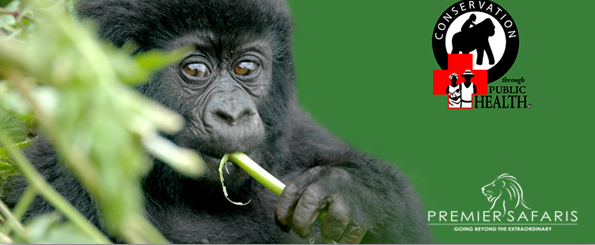
The trip includes game drives as well as Boat Safaris on the White Nile prior to the Eclipse event itself. The national park where you would be staying for the duration of your trip is known for its fast Savannahs that seep into spectacular rain-forests. It’s also one of the most densely populated animal populations in Uganda, and the country is also known for its astounding primate variety including Chimps and Gorillas.
"Standing in these untouched landscapes - gazing up at the unreal fuchsia hues of the solar prominence's, the swirling wisps of corona around the black disk of the Moon - promises to be an experience you'll carry with you forever"
Details of the Eclipse
The track across Uganda descends from the high mountains along the border with the DRC, crosses the flat plateau north of Lake Albert, climbs over a lower set of hills to reach Gulu, descends again through the middle of the country and then climbs another set of peaks to reach the Kenya border. This makes selection of a site in northeast Uganda complicated but the satellite measurements are pretty clear on the best site - a location north of Lake Albert near Pakwach.

· Getting Ready - Create a checklist:
These trips are essential for photographers and serious eclipse chasers.
- Make a pack list to ensure you remember all the essentials. List them down on a notepad or save them in your smartphone, tablet, or laptop.
- · Choose the right equipment - optics and mount: To capture detailed, close-up shots of the eclipse’s partial phases, Baily’s beads, diamond rings, solar prominences, and inner corona, you’ll want a telephoto lens or telescope of sufficient focal length of about 500 to 1,000 millimeters (or even longer). This will give you a reasonably large image of the sun’s disk in the frame.
- · Make sure your tripod and head are sturdy enough to carry the load of your telescope and camera gear and that the tripod would fit inside your carry-on or check-in luggage. Carbon-fiber tripods are stronger and lighter than regular aluminium tripods, but they cost a lot more.
- · Keep your setup light and portable: Portability is essential if you need to move hastily to a different site to escape clouds.
- · Bring solar filters: Use a proper, visually safe solar filter when photographing or observing the eclipse’s partial phases. Keep the filter mounted securely in front of your telephoto lens or telescope objective (and finder scope). The only time it is safe to look at the eclipse directly without a filter is during totality, when the sun’s disk is fully covered by the moon. Be sure to put the filter back on as soon as totality ends.
- · Have extra memory cards and batteries handy: Don’t skimp on memory cards. Use a reliable, high-speed, large-capacity (8 gigabytes or more) memory card when shooting the eclipse. Pack your things carefully: When disassembling your gear, carefully pack each part so you don’t leave behind any essential screw, adapter, or cable. Also, place delicate optics and cameras in your carry-on baggage to ensure safe handling. Check with your airline or travel agent regarding baggage size and weight restrictions to avoid problems or delays during check-in and boarding. Also allow ample time for airport security screening.
- · Register your equipment: If you are bringing along expensive telescopes, cameras, or computers, you can register your equipment with the U.S. Customs prior to your departure. You have to bring them to the local customs office at the airport, where you need to fill out CBP Form 4457 “Certificate of Registration for Personal Effects Taken Abroad.” An officer will then stamp and the sign the form, which you need to present upon your return home. More Information here.
- · Monitor the weather: We will have experts on site to help ensure we have some insight into changing conditions. Get the latest weather update or satellite images and animations from the Internet to help you plan on where to go in case clouds or rain showers threaten your intended eclipse observing site.
- · Automate your imaging: Many eclipse chasers now use custom software that let them pre-program their entire imaging sequence in their laptop computer. Using USB or FireWire (IEEE 1394) connection, they let the computer control their digital SLR camera from start to finish. The captured images are then automatically downloaded and saved into the computer’s hard drive. All the eclipse chasers have to do is to sit back, relax, and enjoy the show.
- · For example, for Windows users there’s Eclipse Orchestrator. For Macs, there’s the freeware Umbraphile.
- · Protect your eclipse images and video: Immediately after the event, remove the memory card from your camera or camcorder, label it, and back up the eclipse images or video by copying them into your computer’s hard drive or pocket flash drive.
- · If you’re using videocassette tape for your camcorder, remove the tape for safekeeping; don’t forget to label the videocassette and “lock” it or break its tab so you can’t accidentally erase your recording.
- · Conduct public astronomy outreach: Premier Safaris partners have set up a programme to reach out to schools in the area. A solar eclipse is a perfect opportunity to enlighten the locals about astronomy and space exploration. If you plan to arrive a few days before the eclipse, make arrangements to give talks at a local school or astronomy club and bring a small solar telescope for the students, teachers, parents, and club members to observe with. Don’t forget to bring extra eclipse glasses so you can share the experience with the public.
- · Learn about the host country and its people: Solar eclipses crisscross some of the best destinations in the world. Depending on your budget and time, you can use the eclipse trip to explore a country you've never visited before. Try to learn more about its people, culture, language, and history, sample its cuisine, and visit its top natural attractions.
Warning: Never look directly at the sun, either with the naked eye or through telescopes or binoculars, without the proper filters. To safely view solar eclipses, you can purchase special solar filters or No. 14 welder's glass to wear over your eyes. Standard sunglasses will NOT provide sufficient protection.
Good luck and clear skies on Eclipse Day!

Premier does offer a Chimp and Gorilla trekking extension after the Eclipse programme. Contact them on gm@premiersafaris.com or visit www.premiersafaris.com
Eclipse link at Premier http://www.premiersafaris.com/news/witness-rare-total-solar-eclipse-uganda



.jpg)